
Idaho’s top 10 farm commodities in 2025
By Sean Ellis
Idaho Farm Bureau Federation
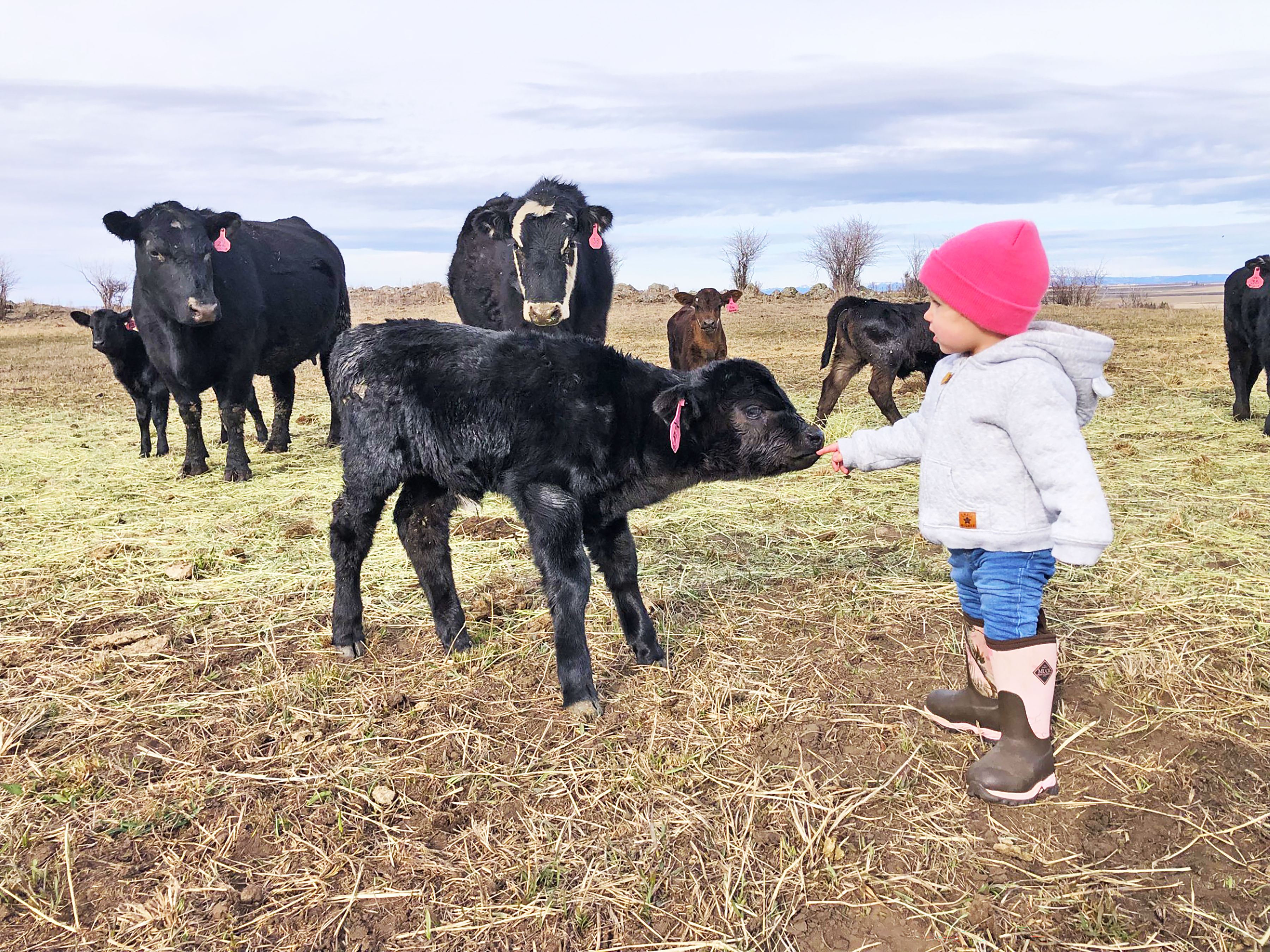
POCATELLO – USDA data released Sept. 3 confirms that the cattle and calves sector bumped milk in 2025 to become the top agricultural commodity in Idaho in terms of farm-gate revenue.
Farm-gate revenue, or farm cash receipts, is what the farmer or rancher receives for their commodity.
Milk had been the state’s No. 1 ag commodity for more than two decades, but the cattle and calves sector, with cattle prices near record highs, took that spot in 2025, by a whisker.
According to USDA, Idaho’s cattle and calves sector recorded a total of 3.878 billion in cash receipts in 2025, while the state’s milk sector recorded $3.827 billion in farm cash receipts.
A University of Idaho report titled “Financial Condition of Idaho Agriculture: 2025,” expects milk to regain the top spot within a year or two.
“Revenues from milk production are expected to reclaim their place as the highest of all agricultural commodities produced in Idaho in 2026 or 2027,” the January report states.
The U of I report had estimated that cattle and calves claimed the No. 1 spot in 2025 and the USDA data released Sept. 3 confirmed that forecast.
Total farm-gate revenue from milk sales in Idaho dipped just slightly in 2025 compared with 2024, while cattle and calves receipts jumped 17 percent year-over-year, from $3.3 billion in 2024 to $3.88 billion in 2025.
The U of I report said most of that increase can be attributed to record cattle prices, but a portion can also be attributed to the ever-increasing quality of beef originating from the dairy sector.
Potatoes again ranked as the No. 3 agricultural commodity in Idaho and the No. 1 crop, bringing in $1.07 billion in cash receipts in 2025, down 11 percent from $1.2 billion in 2024 and 20 percent from $1.34 billion in 2023.
Wheat came in as Idaho’s No. 4 agricultural commodity in 2025 with $518 million in total cash receipts, down 15 percent from $610 million in 2024, and sugar beets recorded a total of $460 million in farm cash receipts, a 2 percent decrease from $470 million.
Hay ranked as Idaho’s No. 6 agricultural commodity in 2025 with $358 million in cash receipts, down 9 percent from $392 million in 2024, barley was No. 7 ($288 million, down 24 percent from $379 million), and chicken eggs ranked No. 8 ($192 million, up 54 percent from $125 million).
Rounding out the top 10 were onions ($176 million, down 27 percent from $239 million) and corn ($131 million, down 4 percent from $137 million).
Other Idaho crops and the total cash receipts they brought in during 2025: dry beans ($94 million), hogs ($75 million), hops ($63 million), trout ($43 million), floriculture ($31 million), mint ($28 million), canola ($26 million).
Idaho also produces a decent amount of fruit, but USDA didn’t estimate that industry’s cash receipt total because of insufficient data to forecast cash receipts for that commodity. The last time USDA estimated cash receipt totals for fruit in Idaho was in 2017, when the department put the total at $14.78 million, which included $8.1 million for apples and $6.6 million for peaches.
The Sept. 3 USDA report showed that Idaho’s livestock industry, which includes eggs, hogs, honey, wool and trout, brought in $8.12 billion in farm cash receipts in 2025, an 8 percent increase over $7.52 billion in 2024.
The state’s crop sector, however, went the other way. USDA estimates total cash receipts for Idaho’s crop sector at $3.83 billion in 2025, down 10 percent from $4.26 billion in 2024.
The USDA data shows Idaho farmers and ranchers brought in a total of $11.95 billion in farm cash receipts in 2025, up 1.5 percent from $11.77 billion in 2024. That is gross revenue and does not show net farm income, which is what the agricultural producer actually takes home after expenses.
USDA shows intermediate product expenses for Idaho farmers and ranchers totaled $6.9 billion in 2025. This includes costs such as feed, seed and livestock purchases, as well as pesticides, electricity, fertilizer, fuel, marketing, storage and transportation, repair and maintenance and irrigation.
The USDA’s September report also puts farmers’ and ranchers’ total payments to stakeholders at $2.2 billion in 2025. This includes hired labor, rent to operator landlords and interest expenses.
Still can't find what you are looking for? Find by topic:
- County Presidents & Board Information
- County Resource Page
- Delegate Form
- Discount Programs
- Discussion Meet
- Discussion Meet - High School
- Education Programs
- Events
- Excellence Award (YF&R)
- Expense Voucher
- Flickr- Photos
- Gem State Producer
- High School Discussion Meet
- High School Speech Contest
- Hope in Idaho Ag
- House of Delegates Credentials Form
- IFBF Board of Directors
- IFBF Staff
- Insurance
- Issue Advisory
- Legislative Action Program
- Legislative Issues
- Library
- MAC Trailer
- Magazines
- Map My Benefits
- Member Benefits
- Member Discount
- Membership Application
- Mental Health Resources
- Mission Statement
- Moving Agriculture to the Classroom
- Newsletter Sign up
- News Releases
- News Room
- Open Range Law
- Photo Contest
Thank You to Our Partners


