
Idaho hop acres rebound a little
By Sean Ellis
Idaho Farm Bureau Federation
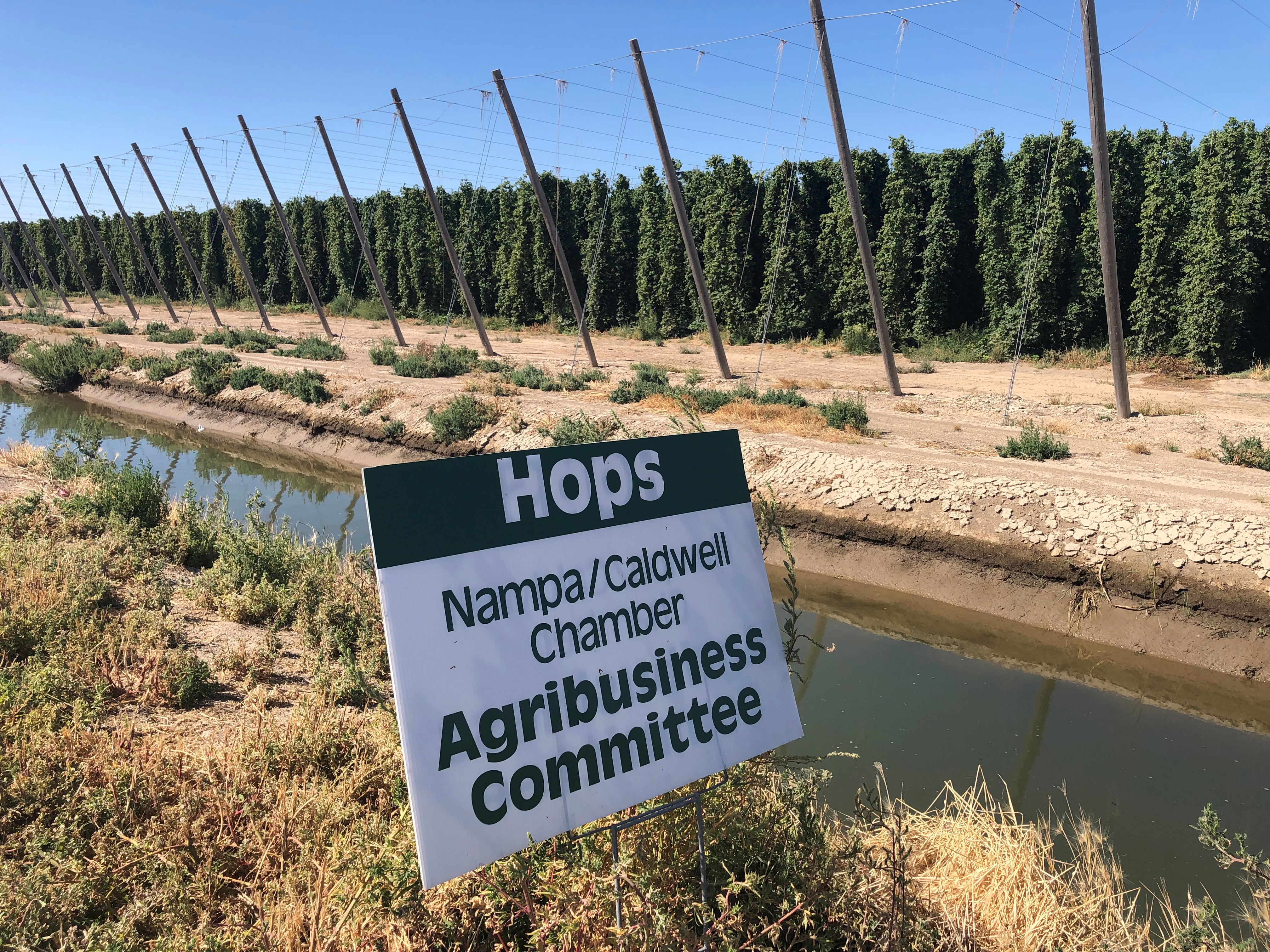
WILDER – After plummeting the past two years, Idaho hop acres rebounded 16 percent this year, although the increase may not be as much as reported.
According to USDA’s Aug. 12 crop production report, Idaho farmers harvested 5,932 acres of hops this year, a 16 percent increase over last year’s 5,102 total.
Idaho Hop Growers Commission Chairwoman Diane Gooding said Idaho hop acres this year may not as high as reported for a variety of factors.
“It’s a false positive, really,” she said about Idaho’s reported hop acres in 2026.
Oliver Schroeder, who serves on the IHGC board and is the past chairman, agreed.
“Acres are pretty steady,” he said. “Those numbers are a little bit ambiguous. They’re pretty close, but they’re not perfect.”
Whether or not reported Idaho hop acreage is as high as USDA’s National Agricultural Statistics Service reported, it seems a lock that Idaho will remain the nation’s No. 2 hop-producing state in 2026.
Hops are used as a bittering and flavoring agent in beer production.
According to USDA, Idaho hop farmers will produce 12.64 million pounds of hops this year, up 9 percent over last year. Average yield is estimated at 2,130 pounds per acre, down from 2,281 pounds per acre last year.
NASS estimates Oregon farmers will produce 9.46 million pounds of hops in 2026 off of 5,533 harvested acres. Oregon hop yields are estimated at 1,710 pounds per acre.
Washington is the No. 1 hop state and NASS estimates Washington farmers will produce 61 million pounds of hops in 2026 off of 30,975 acres. Average yield in Washington is estimated at 1,980 pounds per acre.
Virtually all of the hops in the United States are produced in Washington, Idaho and Oregon. Idaho’s hop acreage is centered around the Wilder-Homedale-Parma area, although a decent chunk of acres are located near Bonners Ferry at Anheuser-Busch’s Elk Mountain Farms.
Even if Idaho hop acres are not quite as high as reported, they are at least not going the other way. After soaring year after year from 2011 to 2021 – they went from 2,265 acres to 9,694 acres during that period – they began plummeting. They fell to 8,645 in 2023 to 5,797 in 2024 and then 5,109 in 2025.
Total hop acres in the Pacific Northwest fell as well, going from 60,872 in 2021 to 44,793 in 2024. NASS estimates that total at 42,440 this year.
U.S. hop acres soared along with the craft beer craze. As that craze has slowed, acres have gone the other way.
“The market’s terrible,” Gooding said. “There’s too much over-supply.”
As U.S. hop acreage soared year after year from 2012-2021, supply eventually exceeded demand, Schroeder said.
“We went way past that supply and demand balance,” he said. “Then the fat kind of ran out.”
The PNW hop industry doesn’t necessarily need more acres, he said. “We just need to balance what we have.”
Adding to the supply-demand challenge, hop prices haven’t been great either, Schroeder said. He said a lot of planted hops are on long-term contracts from 10 years ago.
“They might be the same price, but the cost of everything else has gone up dramatically,” he said. “It’s not the same returns we were realizing 10 years ago.”
According to an annual report by Hop Growers of America, “Growers have faced substantial increases in the cost of production, driven by expansion of harvesting and production capacity to handle a doubling of acreage between 2012 and 2021, updating equipment, increased labor costs (including health care and other benefits), and inflation in the cost of production inputs. Administrative and operating costs associated with food safety, best practices compliance and other customer requirements have also increased.”
The good news is that Idaho’s 2026 hop crop looks pretty good this year, Gooding said. “The crop looks above average. Idaho’s crop, I’m told, is a very strong crop this year.”
Still can't find what you are looking for? Find by topic:
- County Presidents & Board Information
- County Resource Page
- Delegate Form
- Discount Programs
- Discussion Meet
- Discussion Meet - High School
- Education Programs
- Events
- Excellence Award (YF&R)
- Expense Voucher
- Flickr- Photos
- Gem State Producer
- High School Discussion Meet
- High School Speech Contest
- Hope in Idaho Ag
- House of Delegates Credentials Form
- IFBF Board of Directors
- IFBF Staff
- Insurance
- Issue Advisory
- Legislative Action Program
- Legislative Issues
- Library
- MAC Trailer
- Magazines
- Map My Benefits
- Member Benefits
- Member Discount
- Membership Application
- Mental Health Resources
- Mission Statement
- Moving Agriculture to the Classroom
- Newsletter Sign up
- News Releases
- News Room
- Open Range Law
- Photo Contest
Thank You to Our Partners


