
Idaho ag department awards $1.77 million in grants
By Sean Ellis
Idaho Farm Bureau Federation
POCATELLO – Seventeen projects designed to help Idaho’s specialty crop industry have been awarded a total of $1.77 million in grant money this year.
The money was awarded through the Idaho State Department of Agriculture’s specialty crop block grant program, which receives annual funding through the U.S. Department of Agriculture.
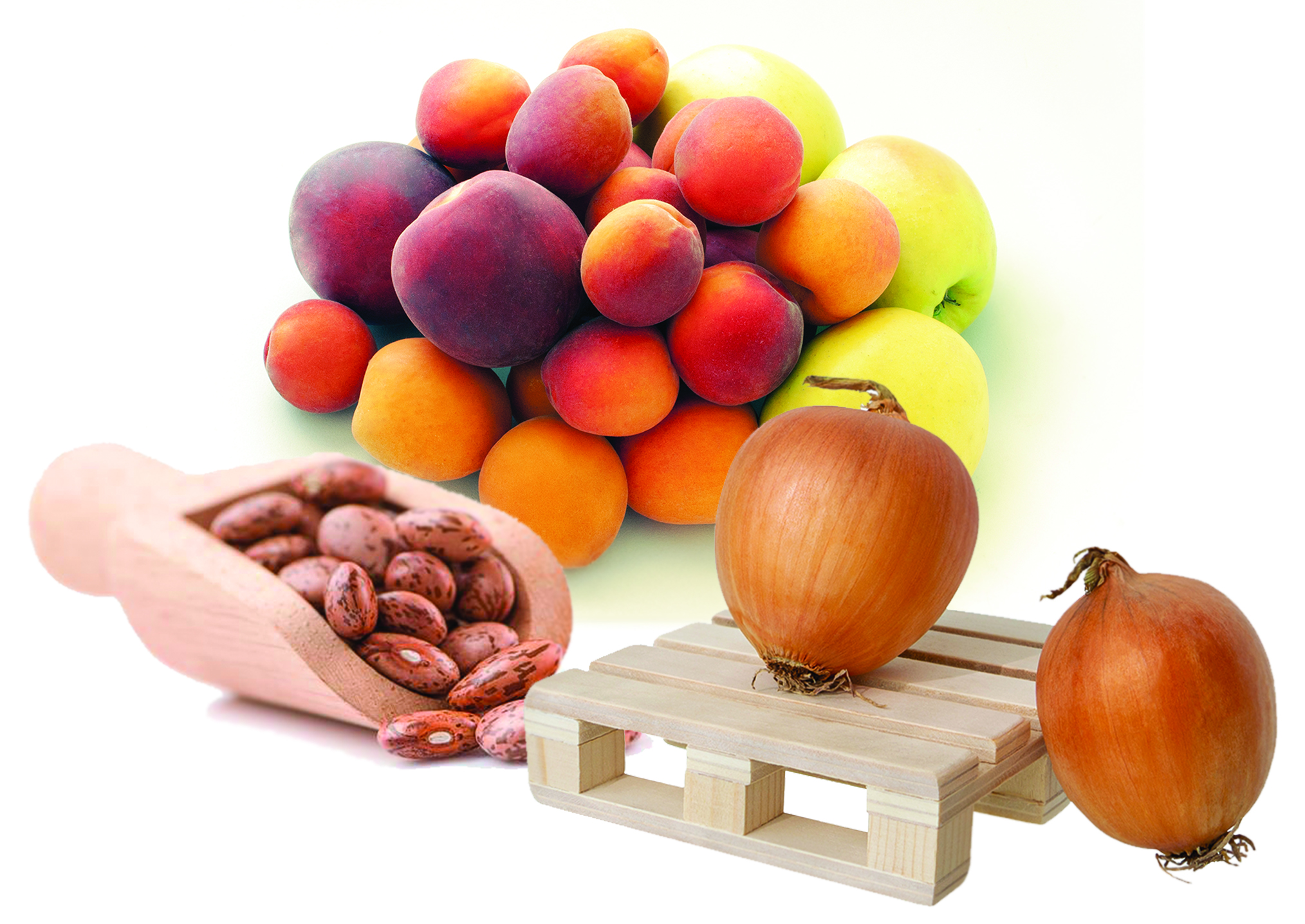
The grant money is used to promote, market and conduct research for the state’s specialty crops, which include vegetables, fruits, tree nuts, dried fruits, nursery and horticulture crops.
According to an Oct. 13 USDA news release announcing this year’s grant recipients, “The funded projects help businesses throughout the specialty crops distribution chain by enhancing food safety, supporting research, developing new and improved seed varieties and specialty crops, fighting pests and diseases, educating communities about healthy eating, and making it easier and more affordable to get specialty crops to market.”
Since it was created in 2009, the Idaho specialty crop block grant program has awarded 244 projects a total of almost $26 million.
These grants have provided great benefits to the state’s specialty crop sectors, according to grant recipients.
The Idaho Wine Commission has received several grants over the years.
"These grants are the reason Idaho wine is on more people's radar than it was 10 years ago,” said IWC Executive Director Moya Shatz-Dolsby. “They've let us tell our story, pour for new audiences, and show up in places we'd never have been able to afford.”
The grants have helped the IWC reach consumers with the story about Idaho’s wine industry, said Julianne Germain, the commission’s operations and grant manager.
"The specialty crop block grants have helped shape the Idaho wine industry by granting the Idaho Wine Commission the opportunity to run large-scale marketing projects that promote all the wineries and cideries in the state of Idaho,” she said.
As a result, Germain added, Idaho’s wine industry has garnered the attention of regional, national and international media.
“We use grant funds to tell the story of Idaho wine from vine to glass and to educate consumers and media alike about the vital role our industry plays in the agriculture and economic structure of this state," she said.
This year, the wine commission was awarded a $215,000 grant to boost consumer awareness of Idaho wines and increase demand. The grant will also be used to boost the competitiveness of Idaho wine producers and growers through quality educational programs.
“The IWC will create an educational curriculum specifically designed to support growers and producers,” the grant summary states.
The Idaho Bean Commission is another commodity group that has received several grants over the years and these have helped fund important research projects, said IBC Executive Director Andi Woolf-Weibye.
She said the grants have been very beneficial to the state’s dry bean industry over the years and have helped the industry do more than it otherwise could have considering the IBC’s relatively small budget.
“Those grants have been a great help to Idaho’s bean growers,” Woolf-Weibye said. “In fact, the specialty crop block grant program has proven helpful to the state’s entire specialty crop industry. We are very grateful for this program.”
The bean commission received two grants this year. A $105,000 grant will be used to create an Idaho Bean Bragging Rights marketing campaign to help educate growers about the importance and benefit of Idaho’s clean, disease-free seed. This project will include an education campaign to increase demand for beans.
The IBC will use an $80,000 grant to optimize bean quality and manage plant bacterial diseases. The grant will help pay for field trials that will analyze yield, quality and disease data.
Boise State University received a $130,000 grant to address the needs of the $750 million southwest Idaho crop seed industry, which is one of the main seed-producing regions of the world. This projects aims to use a non-thermal plasma device to reduce the spread of plant diseases. It also aims to improve germination and crop yields and improve food safety by inactivating human pathogens that can cause foodborne illness.
The Idaho Apple Commission received a $25,000 grant to create exposure and demand for Idaho apples through the use of consumer promotions and social media.
“A positive message brought for the Idaho apple industry is through local radio advertising,” the grant summary states. “This lets the consumer know when Idaho apples are available at local retailers … Another new promotion the commission would like to implement would be with local grade schools. This would help educate students about Idaho apples, nutritional value and its importance, and where they come from.”
The Idaho Cherry Commission will use a $20,000 grant to support a project aimed at increasing awareness and demand for Idaho cherries through local promotions, a website and social media. This project will use in-store demos and local promotions, which, according to the grant summary, “are an excellent way to create awareness and increase demand for Idaho cherries.”
ISDA awarded the Idaho Hop Grower’s Commission a $65,000 grant to increase awareness of Idaho hops through trade missions, local promotions and social media.
“With the reduction in the number of hop acreage that has taken place over the past few years, it is important to stay in touch with the brewers and dealers,” the grant summary states. “The two-year project will include industry members attending domestic and international trade shows to learn from brewers and dealers, as well as attending trade missions when they are offered. Traveling to other countries is a great way to learn first-hand from buyers what they are looking for in hops. The project also will bring international buyers to Idaho … to learn first-hand the growing practices for Idaho hops.”
The Idaho Eastern Oregon Onion Committee was awarded two grants. The committee will use a $70,000 grant to investigate the impact of irrigation on bacterial decay, yield and bulb quality for onion crops.
According to the grant summary, “Moisture is a known driver of bacterial decay. Although there have been advances in the use of drip irrigation in the Treasure Valley, concerns about bacterial rots and bulb quality remain. Drip irrigation is also expensive and creates abundant waste drip tape. This project will investigate the feasibility of overhead irrigation.”
The onion committee received an $80,000 grant to increase the recognition of IEOOC onions through the use of social media, trade shows and global travel.
“With the constant change of agriculture, it is important for the IEOOC to monitor its existing markets and to look for new markets,” the grant summary states. “Trade missions and trade shows allow IEOOC and industry members to evaluate new possibilities and opportunities….”
Idaho Preferred received a $280,000 grant to strengthen market access and business growth for Idaho specialty crop producers. It will do this, according to the grant summary, “through coordinated retail partnerships, consumer marketing campaigns, foodservice engagement, and producer business development resources designed to support long-term industry growth. This initiative focuses on increasing visibility and demand for Idaho-grown specialty crops while helping producers scale their businesses into new market channels, including retail grocery and foodservice.”
The ISDA itself will use a $15,000 grant to introduce Idaho wines to Japan. According to the grant summary, “The Idaho State Department of Agriculture will plan and execute an inbound mission of buyers and a media contact to introduce Idaho's wine regions to Japan, while facilitating business connections for Idaho wine producers that are interested in exporting (their) products to increase sales.”
The Mid Snake Resource Conservation and Development Council received a $61,000 grant for a project that seeks to reduce codling moth populations in the Magic Valley through the release of sterile insects. This project aims to mitigate the impact of codling moth damage to apple and pear trees by releasing sterile male codling moths info infected orchards weekly during the season to mate with wild moths.
According to the grant summary, “This project will utilize a biological control that is not currently being used by growers in the region.”
A $94,000 grant was awarded to the Panhandle Farm Corridor to showcase specialty crop growers in North Idaho with farm stands. The goal is to “increase public awareness and farm stand sales.”
The Sunnyslope Wine Trail received a $100,000 grant to grow demand for Idaho-grown wines using a two-year strategic marketing and ag tourism initiative. Sunnyslope Wine Trail is a non-profit association of 20 grape growers and winemakers in southwestern Idaho.
“The project’s purpose is to expand consumer recognition of the Sunnyslope Wine Region, strengthen direct-to-consumer wine sales, and increase visitation to rural wineries that primarily produce wines from Idaho-grown grapes,” the grant summary states.
The University of Idaho received a $141,000 grant to evaluate methods to manage Potato virus Y. According to the grant summary, the project “will evaluate effectiveness of cultural control and biological control for seed potato growers to manage Potato virus Y under Idaho growing conditions.”
The U of I also received a $139,000 grant for a project that seeks to improve the cultivability and transplant of Idaho big mountain huckleberries. “Domestication of huckleberries as a specialty fruit crop would benefit the Idaho specialty crop industry,” the grant summary states. “Propagation and transplant mortality have plagued earlier domestication efforts … This research represents a key first step for developing big mountain huckleberry as a new specialty fruit crop.”
A $149,000 grant was awarded to the U of I to try to develop an alternative method to control sprouting in potatoes.
“Sprouting causes significant economic losses in potatoes by accelerating water loss, starch and protein mobilization, and tuber wilting, ultimately reducing processing and market quality,” the grant summary states.
Still can't find what you are looking for? Find by topic:
- County Presidents & Board Information
- County Resource Page
- Delegate Form
- Discount Programs
- Discussion Meet
- Discussion Meet - High School
- Education Programs
- Events
- Excellence Award (YF&R)
- Expense Voucher
- Flickr- Photos
- Gem State Producer
- High School Discussion Meet
- High School Speech Contest
- Hope in Idaho Ag
- House of Delegates Credentials Form
- IFBF Board of Directors
- IFBF Staff
- Insurance
- Issue Advisory
- Legislative Action Program
- Legislative Issues
- Library
- MAC Trailer
- Magazines
- Map My Benefits
- Member Benefits
- Member Discount
- Membership Application
- Mental Health Resources
- Mission Statement
- Moving Agriculture to the Classroom
- Newsletter Sign up
- News Releases
- News Room
- Open Range Law
- Photo Contest
Thank You to Our Partners


