
Hemp acres down significantly in Idaho
By Sean Ellis
Idaho Farm Bureau Federation
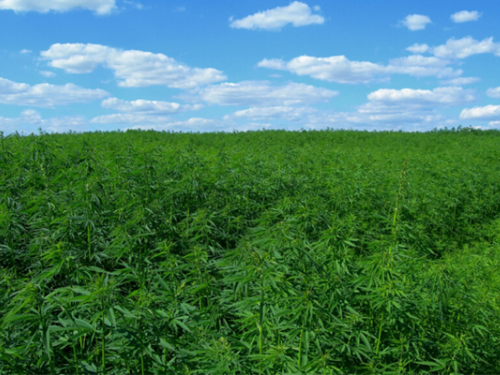 POCATELLO – Hemp is down in Idaho right now, but it’s not out.
Idaho hemp acres have fallen significantly since reaching a high in 2024. That’s due to the usual suspect: supply has outpaced demand, for now. Until demand catches up, acres will likely continue to remain depressed.
2022 was the first year that Idaho farmers were allowed to grow hemp, under tight guidance from the Idaho State Department of Agriculture. That year, the state’s farmers grew 458 acres of hemp. In 2023, that number increased to 1,248 and in 2024, Idaho hemp acres reached a high of 1,860.
Last year, though, as supply piled up, hemp acres in Idaho declined to 1,242 and this year, as of May 12, Idaho farmers had notified the ISDA that they intended to plant only 233 acres of the crop.
The only hemp processing facility in Idaho right now is Idaho Hemp Processing in Rexburg.
Howe farmer Travis McAffee, who grew hemp two years ago, will not grow hemp this year. The reason is simple: He can’t get a contract from IHP to grow hemp, like he did before.
“The reason I haven’t regrown it (since 2024) is just the contracts,” McAffee said. “The plant there in Rexburg … can’t move it fast enough.”
He said he would definitely grow hemp again, if the supply and demand situation changes.
“Yes, I would grow it again because it’s a crop that uses less water than my malt barley did,” McAffee said. “It’s a nice crop to put in the rotation. Out here in the Little Lost, all we can do is small grains like wheat and malt barley, and hay. So, when this was another crop we could bring into the area, it made it nice.”
For now, hemp is a niche crop in Idaho. For example, Idaho farmers typically grow about 1.2 million acres of hay, 1.2 million acres of wheat, 300,000 acres of potatoes, 540,000 acres of barley, 350,000 acres of corn and 170,000 acres of sugar beets, every year.
For hemp to become a major or even medium crop in Idaho, McAffee said, will require more demand and more processing capacity.
He said hemp in Idaho is not in trouble, it’s just going through a typical supply-and-demand cycle right now, as all agricultural commodities do.
Mattie Mead, the owner of Hempitecture in Jerome, agrees. His facility, uses industrial hemp processed from Idaho Hemp Processing and from IND Hemp in Montana to create high-performance building materials such as insulation.
He said he’s hopeful that hemp acres will rebound in Idaho because the crop grows well in Idaho’s climatic conditions.
“I think Idaho’s got the right climate. I think the (ISDA’s) protocol … is fair and balanced. I think we have the right ingredients for success in Idaho. It’s going to take time,” he said. “I wouldn’t be surprised if we see a cycle where there’s a reduction in acreage and the following year there’s an increase in acreage and the following year a reduction.”
Industrial hemp products have always been sold legally in the United States but not until the 2018 farm bill was passed was it legal to grow and process hemp commercially in the U.S.
The hemp products sold in the U.S. previously came from other countries.
While the farm bill made it legal to produce industrial hemp, the federal government left it up to individual states to approve their own hemp plans that adhered to federal guidelines.
Idaho became the last state in the nation to adopt a hemp program and legalize the production and processing of industrial hemp.
The legislation is a narrow bill and only allows for people to grow and process industrial hemp if they obtain a license from the Idaho State Department of Agriculture. People can also transport it on behalf of someone with a license.
The 2018 farm bill established industrial hemp as cannabis containing no more than 0.3% THC, the psychoactive compound associated with marijuana.
Federal regulations, however, recognize that environmental and growing conditions can affect THC levels and therefore provide growers some flexibility by not automatically considering a crop to be in violation of federal law unless it exceeds 1% THC, provided the producer acted reasonably and in compliance with approved growing and testing requirements.
Until this year’s legislative session, Idaho maintained a stricter standard that did not provide farmers the same regulatory flexibility available under the federal program. Beginning July 1, however, Idaho producers will operate under a framework much more closely aligned with federal regulations following the legislature’s passage of House Bill 772.
According to experts, it is near impossible to get high from industrial hemp.
According to ISDA, Idaho has the strictest hemp standards in the country.
Braden Jensen, director of governmental affairs for Idaho Farm Bureau Federation, helped craft the bill that established Idaho’s hemp program.
He said hemp is still basically a new crop in Idaho and a small group of growers is trying to figure it out and literally plowing its future in Idaho.
“While the state’s hemp acres have fallen since reaching a high in 2024, the crop is by no means dead in Idaho,” he said. “Idaho farmers know how to grow a crop and if anyone can figure it out, they can. I think hemp will continue to take baby steps in Idaho as farmers continue to pioneer the crop’s future here.”
Still can't find what you are looking for? Find by topic:
- County Presidents & Board Information
- County Resource Page
- Delegate Form
- Discount Programs
- Discussion Meet
- Discussion Meet - High School
- Education Programs
- Events
- Excellence Award (YF&R)
- Expense Voucher
- Flickr- Photos
- Gem State Producer
- High School Discussion Meet
- High School Speech Contest
- Hope in Idaho Ag
- House of Delegates Credentials Form
- IFBF Board of Directors
- IFBF Staff
- Insurance
- Issue Advisory
- Legislative Action Program
- Legislative Issues
- Library
- MAC Trailer
- Magazines
- Map My Benefits
- Member Benefits
- Member Discount
- Membership Application
- Mental Health Resources
- Mission Statement
- Moving Agriculture to the Classroom
- Newsletter Sign up
- News Releases
- News Room
- Open Range Law
- Photo Contest
Thank You to Our Partners


About the author
Sean Ellis