
Capitol Reflections: 2026 Session, Issue 8
By: Idaho Farm Bureau Governmental Affairs
"In a government of laws, the existence of the government will be imperiled if it fails to observe the law scrupulously. Our government is the potent, the omnipresent teacher. For good or for ill, it teaches the whole people by example. Crime is contagious. If the government becomes a lawbreaker, it breeds contempt for the law; it invites every man to become a law unto himself; it invites anarchy." - Justice Louis Brandeis in Olmstead v. United States (277 U.S. 438, 1928)
Capitol Minute
To help our members be fully informed about the issues going on during the legislative session, there will be a short video each week in which our Governmental Affairs team highlights what is discussed in length in the Capitol Reflections Newsletter. We strongly encourage members to continue reading the newsletter to get the most information, but this video will help when you want a quick synopsis or to learn about the issues on the go.
Podcast - Audio Only
State Sovereignty Asserted
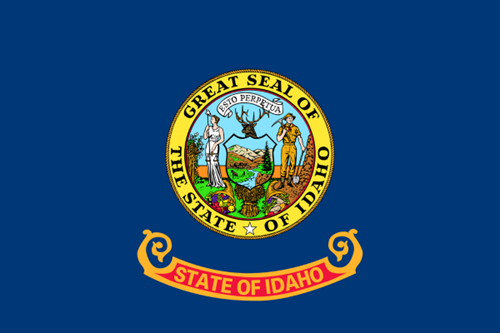 Our nation was founded upon a designed tension between the federal and state governments. Each was supposed to push back and provide a check against the other to ensure that neither entity would grow beyond their specifically authorized boundaries.
Unfortunately, over the decades, states have become complacent and instead of vigorously exercising their sovereignty and defending their legal jurisdictions, they have allowed the federal government to expand their scope, far beyond what is authorized by the US Constitution.
H650 is a step in the right direction. H650 asserts the sovereignty of the State of Idaho by declaring that, pursuant to the ninth and tenth amendments of the US Constitution, “all powers not expressly granted to the federal government by the constitution of the United States” are reserved to the state of Idaho.
H650 further clarifies that “jurisdiction over all matters arising within the state shall be presumed to reside with the state unless the federal government demonstrates that the constitution of the United States expressly and specifically delegates such jurisdiction to the federal government.”
H650 declares Idaho has primary jurisdiction over “public health and safety, education, water and natural resources, agriculture, energy, land use and zoning, and local economic regulation.”
H650 places the legal burden on the federal government to prove that they have a clear delegation of authority through the US Constitution for their asserted powers.
H650 was approved last week in the House State Affairs Committee on a party line vote. It was approved on the House floor by a vote of 62-6-2. H650 will now advance to the Senate for a hearing in the Senate State Affairs Committee. H650 is sponsored by Rep Judy Boyle (R-Midvale) and Rep Heather Scott (R-Blanchard).
IFBF policy #47.8 states: “we support the legislature and the governor asserting their authority and taking all necessary measures to protect the citizens and counties of the state of Idaho from federal agency overreach.” IFBF supports H650.
Trapping Bill Heads to Senate
 H678 has now passed the House and moves to the Senate for consideration. The bill clarifies in Idaho code that wolf trappers must check their traps every three days, but that check does not have to be done physically. Instead, trappers may use transmitting game cameras to monitor traps remotely. This allows traps to be monitored more frequently while reducing unnecessary travel and human presence in the area. The bill represents a commonsense, twenty-first-century update to support effective wolf trapping. IFBF supports H678.
Slow Moving Vehicle Bill Gets Amended
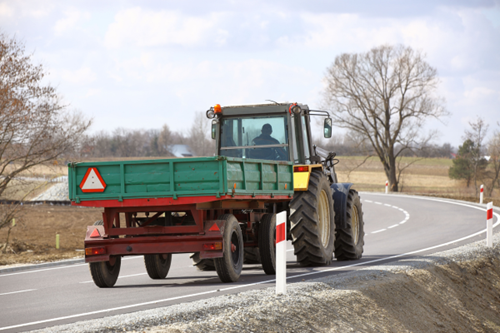 S1224 has been amended. Law enforcement organizations had consternation that the original bill gave drivers of slow-moving vehicles, construction equipment, or farm implements the ability to make the sole decision on when a turnoff is safe and size-appropriate. The concern was this would incentive drivers to keep driving past turnouts that would be good spots to pullover, so they did not have to slow down. In short, they argued producers would be jerks on the road. Since the committee chair continued to hold the bill, a compromise became necessary. Now the bill states that the driver can continue to block traffic until a safe and reasonable designated turnout or location exists for the driver to temporarily exit. Despite not being as good as the original version, this bill continues to give producers a defense for not pulling over, especially when three or more vehicles stack up behind them, rather than the current law where the producer loses every time IFBF supports S1224a.
County Fair Governance Bill Introduced
 This week, Rep. Jerald Raymond (R- Menan) introduced a bill dealing with County Fair Boards. House Bill 823 updates Idaho law governing county fair boards by repealing an outdated provision in Idaho Code that allowed certain counties to convert their county fair board into an advisory body rather than a governing board. The statute applied only to counties with a population exceeding 200,000 people and required the change to occur before January 1, 2024. This population-based trigger was originally adopted decades ago to address a unique situation at the time but no longer reflects sound governance practices for county fairs today.
County fairs play an important role in Idaho’s agricultural heritage and rural communities. Fairgrounds are often used year-round for agricultural events, youth programs, community gatherings, and economic activities that support local economies. Because of their importance, many stakeholders believe governance structures for county fairs should be clear, stable, and consistent across the state rather than dependent on an arbitrary population threshold.
H823 removes this outdated provision from state law while protecting counties that have already relied on the law prior to the deadline. By eliminating the population trigger moving forward, the legislation provides greater clarity and consistency in how county fair boards operate. Supporters say this change helps avoid future governance uncertainty and ensures county fair boards continue to function under well-established statutory authority.
The Idaho Farm Bureau Federation has long supported reviewing and updating state statutes related to county fairs to better reflect modern fairground operations. Farm Bureau policy specifically supports either raising the population threshold significantly or eliminating the statute altogether. H823 aligns with that policy goal by modernizing Idaho law and helping ensure county fair governance remains stable and consistent for the future.
New Large Energy Load Bills Introduced
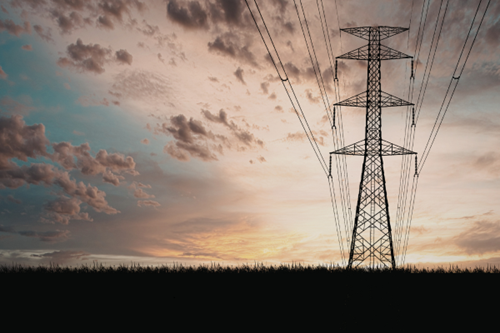 Two pieces of legislation introduced this session aim to address an issue that is becoming increasingly important as Idaho continues to attract energy-intensive development. House Bill 756 and Senate Bill 1368 both focus on how very large new electricity users connect to the grid and how the costs of serving those loads are allocated.
H756, introduced by Rep. Stephanie Mickelsen (R-Idaho Falls), would establish a statutory “no rate increase” standard for new electric loads of 20 megawatts or more. Under the proposal, the Idaho Public Utilities Commission would be required to conduct a detailed “no-harm test” before utilities could provide service. This analysis would examine infrastructure costs, reliability impacts, financial risk, and long-term system effects to ensure that existing customers do not see higher electricity rates as a result of serving the new load.
The legislation also includes additional safeguards designed to prevent cost shifts over time. These provisions include financial security requirements, exit fees to address stranded infrastructure costs if a large customer leaves the system, and periodic reviews to ensure that the original no-harm determination remains accurate.
A second proposal, S1368 introduced by Sen. Jim Guthrie (R- McCammon), approaches the issue somewhat differently. Rather than establishing a new analytical framework, S1368 seeks to codify the regulatory process currently used by the Commission when reviewing large load service contracts. The bill would apply to new electric loads of 30 megawatts or more and would require utilities to demonstrate that the new customer is responsible for funding its share of generation, transmission, substation, and distribution infrastructure investments that would not otherwise be necessary.
Idaho’s investor-owned utilities have generally indicated that they prefer the approach taken in S1368. They argue that the Commission already has a well-established regulatory framework for evaluating large load service agreements and that codifying those existing practices provides clarity without creating additional administrative burdens.
As Idaho’s economy grows and new energy-intensive industries consider locating in the state, policymakers are increasingly focused on ensuring that growth does not result in higher electric rates for existing customers. While H756 and S1368 take somewhat different approaches, both proposals reflect the shared goal of preventing cost shifts and ensuring that new large energy users pay their fair share of system costs.
IFBF Policy #79 states, “We support policies that require new large energy loads to bear the full, direct costs of infrastructure necessary to support their operations. The burden of building out new generation, transmission, or distribution capacity should not fall on existing ratepayers.” As the Legislature continues to evaluate these proposals, we will continue to monitor the progress of both H756 and S1368 and keep our members informed about any updates or amendments that may be considered.
Property Rights Bill Advances
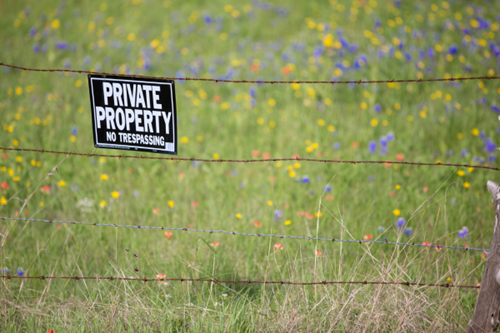
S1326a promotes a simple concept – government employees are not exempt from following the law.
In America, we recognize the constitution as the supreme law of the land. However, government employees routinely ignore a specific clause in the US Constitution and the Idaho Constitution.
Both documents prohibit government agents from entering private property without landowner permission, or a warrant. This was understood and followed by government for many decades, but for the past several years, there have been reports of various government employees from different agencies who have been ignoring this fundamental property right that is guaranteed by the constitution.
S1326a makes it clear that no government employee can enter private property without landowner permission or a warrant, except under very narrowly crafted, emergency type circumstances that are recognized by courts. S1326a also provides a penalty for those who violate this important right.
Last week, S1326a was heard in the Senate State Affairs Committee. Several citizens from across Idaho shared their experience with government employees entering their property without their knowledge. Some drove from as far away as Ashton and Athol to personally tell their horror stories. Their experiences included damage to farm fields, antlers stolen from their property, and children traumatized from agents peering through the windows of their home. It was one experience after another of illegal, unethical and downright inappropriate behavior by government employees.
There were only two who testified in opposition, Trout Unlimited and Idaho Fish & Game. After the strong rebuke that Idaho F&G received from Senate President Pro Tem Kelly Anthon (R-Declo), it appeared that F&G probably regretted showing up that day. In their testimony, F&G claimed that they had to enter property to check compliance with hunting and fishing laws. Pro Tem Anthon then expressed dismay that F&G believed it was OK to violate a fundamental property right which is guaranteed by the constitution just to check someone’s fishing license. The committee agreed and unanimously sent S1326 to the amending order to address a couple of minor issues that the Idaho Association of Counties requested.
S1326a will now be considered by the entire Senate prior to moving to the House for consideration. S1326a is sponsored by Rep Judy Boyle (R-Midvale), Rep Joe Alfieri (R-Coeur d’Alene), Sen Mark Harris (R-Soda Springs) and Sen Jim Guthrie (R-McCammon). IFBF policy #155.3 supports laws requiring landowner permission or a warrant prior to government employee entry into private land. IFBF supports S1326a.
------------------------------------------------------------------------------------
Resources Available to Follow During Session:
Legislative Website Homepage: HERE
2025 Legislative Session Bill Center: HERE
List of Senate Committee Assignments: HERE
List of House Committee Assignments: HERE
Current Senate Committee Agendas: HERE
Current House Committee Agendas: HERE
Watch Committee Meetings and Floor Sessions Live: HERE
Governor’s Bill Action and Legislative Communications: HERE
Still can't find what you are looking for? Find by topic:
- County Presidents & Board Information
- County Resource Page
- Delegate Form
- Discount Programs
- Discussion Meet
- Discussion Meet - High School
- Education Programs
- Events
- Excellence Award (YF&R)
- Expense Voucher
- Flickr- Photos
- Gem State Producer
- High School Discussion Meet
- High School Speech Contest
- Hope in Idaho Ag
- House of Delegates Credentials Form
- IFBF Board of Directors
- IFBF Staff
- Insurance
- Issue Advisory
- Legislative Action Program
- Legislative Issues
- Library
- MAC Trailer
- Magazines
- Map My Benefits
- Member Benefits
- Member Discount
- Membership Application
- Mental Health Resources
- Mission Statement
- Moving Agriculture to the Classroom
- Newsletter Sign up
- News Releases
- News Room
- Open Range Law
- Photo Contest
Thank You to Our Partners


