
Capitol Reflections: 2026 Session, Issue 6
By: Idaho Farm Bureau Governmental Affairs
“Congress has not unlimited powers to provide for the general welfare, but only those specifically enumerated.” - President Thomas Jefferson
Capitol Minute
To help our members be fully informed about the issues going on during the legislative session, there will be a short video each week in which our Governmental Affairs team highlights what is discussed in length in the Capitol Reflections Newsletter. We strongly encourage members to continue reading the newsletter to get the most information, but this video will help when you want a quick synopsis or to learn about the issues on the go.
Podcast - Audio Only
Reasserting Historic Property Rights
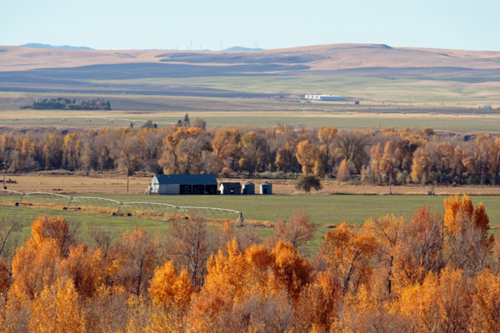 Most citizens and legislators are surprised to learn that there are government employees in Idaho who believe they are authorized to enter private property simply because they work for the government. These agencies have no statutory authority to do so, but despite the 4th Amendment of the US Constitution and similar language in the Idaho Constitution, they feel empowered to go wherever they think they need to go to perform their government duties.
Our forefathers were adamant about including language in our constitutions to protect private property from government intrusion. One of the most important landowner rights is the right to exclude others, including government agents. Historically, the only way government agents could enter private property is with the permission of the owner or a warrant from a judge based upon probable cause that a crime had been committed. Over the years, the courts have recognized a few, limited circumstances under which a government agent can enter without a warrant or permission. These “exigent circumstances” are typically emergency situations where there is not time to obtain a warrant. However, they must meet strict parameters to be lawful.
Farm Bureau members have been alarmed at the number of government employees who feel empowered to enter private property with no legal authority to do so. These include employees of Idaho Department of Lands, Idaho Department of Fish & Game, County Assessors, US Forest Service and BLM, Idaho State Department of Agriculture, County Planning and Zoning, and others. To address this situation, IFBF has worked closely with county prosecutors and sheriffs to craft a bill that would re-establish historic 4th Amendment protections against government intrusion, while ensuring that law enforcement can continue to do their jobs and catch the bad guys.
This week S1326 was introduced in the Senate State Affairs Committee. S1326 would require any government agent to obtain permission from the landowner prior to entering private property unless they have a warrant, or there are exigent circumstances. S1326 provides a civil penalty of $1,000 to the landowner or lessee when government employees violate their property rights.
Some have asked why we need this bill since property rights are protected in the constitution. This is similar to why we have laws that prohibit murder, along with penalties for those who violate the law. The constitution protects our right to life, but it is not self-enforcing. We still need statutes that prohibit activities that are forbidden in the constitution, and penalties to make sure they are enforced. S1326 will provide the legal enforcement mechanism protecting the property rights guaranteed by our constitutions.
S1326 is sponsored by Senator Mark Harris (R-Soda Springs), Senator Jim Guthrie (R-McCammon), Rep Judy Boyle (R-Midvale) and Rep Joe Alfieri (R-Coeur d’Alene). IFBF policy #155.3 seeks to make it unlawful for any state or federal agency representative to enter private property without the permission of the owner or a warrant. IFBF supports S1326.
Fake Meat Labeling Bill Moves Forward
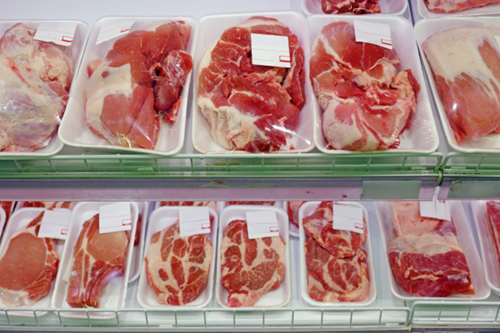 This week the Senate Agricultural Affairs Committee moved S1270 to the amending order for some technical corrections. S1270 requires any alternative animal protein products to be labeled as “lab-grown protein,” “cell-cultivated protein,” “cell-cultured protein,” or “alternative animal protein.”
The labeling must appear on the principal display panel of the packaging, use a font size and style that ensures legibility and is at least equal in prominence to the product name. Restaurants or other vendors offering alternative animal proteins must also provide labeling on menus or otherwise clearly notify consumers.
Just as importantly, S1270 prohibits the use of “terms commonly associated with specific meat cuts, including but not limited to “steak,” “roast,” “tri-tip,” “loin,” or “brisket.” This ensures that these fake meat products are not labeled in a way that might deceive consumers, so they do not inadvertently buy a lab-grown protein product thinking it is traditionally raised meat.
To ensure these prohibitions are followed by manufacturers, the Idaho State Department of Agriculture would be authorized to promulgate rules and would then enforce this law. Penalties are provided up to $500 per violation.
The sponsors of S1270 are Senator Tammy Nichols (R-Meridian) and Rep Heather Scott (R-Blanchard). Senator Nichols asked the committee to send S1270 to the amending order to adjust some language that will make S1270 more consistent with other similar labeling laws across the nation, and ensure there is no conflict with federal labeling requirements.
The only opposition in committee came from Food Northwest, a consortium of food processors. Their main concern was not about the goal of transparency in labeling, but they object to a “patchwork of labeling laws” in many states across the nation. It was mentioned that 17 other states have passed similar labeling requirements for fake meat, and they prefer that labeling be required at the federal level so as to prevent inconsistency between state requirements.
IFBF testified in support of S1270 based on AFBF policy 345, labeling of lab produced protein. We stressed that Congress and FDA are both typically slow to act and are unlikely to provide national labeling standards for lab grown meat until a majority of states demonstrate support for doing so. Ultimately, the committee agreed and sent S1270 for amendment on a unanimous vote. Once S1270 is amended, it will be considered on the Senate floor, and if successful, will then advance to the House for consideration. IFBF supports S1270.
Strengthening County Coordination with Federal Agencies
 The House Local Government Committee approved a bill that would strengthen the ability of County Commissioners to protect their local economies, customs and culture. H620 declares that “the board of county commissioners shall be deemed to have special expertise on all subject matters for which it has statutory responsibility” when acting as a “cooperating agency in matters related to the national environmental policy act and in federal land planning, implementation and management actions.”
H620 also clarifies that any county which has adopted a comprehensive plan may coordinate that plan with federal agencies to make sure federal planning efforts are consistent with the county plan. This coordination process is authorized in several federal laws including the Multiple-Use Sustained-Yield Act of 1960, the Forest and Rangeland Renewable Resources Planning Act of 1974, and the Federal Land Policy and Management Act of 1976.
It appears some counties have been reluctant to engage in these congressionally authorized processes in the past. It is the hope that H620 will embolden county commissioners to engage and help ensure that the local plans will be honored by federal agencies.
H620 passed the House floor and advanced to the Senate. H620 is sponsored by Rep Judy Boyle (R-Midvale) and Senator Mark Harris (R-Soda Springs) and is supported by the Idaho Association of Counties. IFBF policy #47.7 and 108 encourage county commissioners to engage in this coordination process. IFBF supports H620.
Water Storage Memorial
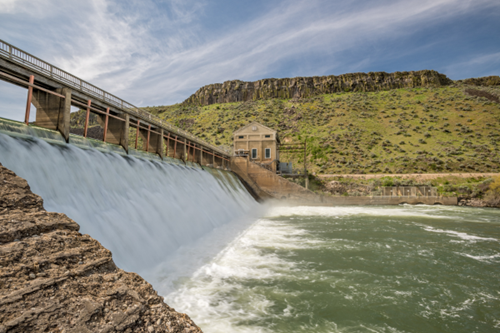 Water remains a top priority for elected officials at the Capitol. With low snowpack levels across the state, Idahoans are once again reminded of the value of existing water storage systems and the need to continue expanding that capacity. As Idaho makes ongoing investments in water infrastructure, a group of lawmakers has introduced a memorial outlining a long-term vision for additional water storage.
House Joint Memorial 14, sponsored by Rep. Ben Fuhriman, Rep. Rod Furniss, Sen. Kevin Cook, and Sen. Van Burtenshaw, calls on the President, Congress, the U.S. Department of the Interior, and the Bureau of Reclamation to partner with Idaho in expanding water storage capacity. The memorial outlines ongoing challenges, including declining aquifer levels, recurring curtailments for groundwater users, reduced snowpack, and earlier runoff timing, all of which place increasing pressure on Idaho agriculture, communities, and the broader economy.
The memorial emphasizes that Idaho currently lacks sufficient reservoir capacity to capture water that flows down the Snake River and out of state each year. While aquifer recharge has provided benefits, lawmakers recognize that sustainable recharge depends on additional late-season storage. In response, the Legislature sets a long-term goal of creating 750,000 acre-feet of new water storage by 2100, all in an effort to strengthen long-term water reliability. Specifically, the memorial urges federal partners to fast-track feasibility studies for modest raises at Minidoka Dam, Jackson Lake, and American Falls Dam; support planning and design work for new medium-sized reservoirs in eastern Idaho; explore creative financing options, including federal funding and public-private partnerships; and complete an updated basin study within the next two to three years to identify priority projects.
Idaho Farm Bureau policy supports the construction, improvement, and expansion of storage facilities that provide multiple beneficial uses of Idaho’s water. The goals outlined in HJM 14 provide a practical direction to better manage and administer the water resources we have. IFBF supports HJM 14.
Variable Speed Bill Introduced
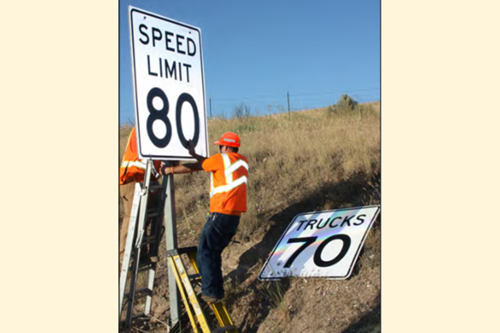 Have you ever traveled down the interstate and got stuck behind semi-trucks trying to pass each other, one on the left governed out and the one on the right unrelenting to the passage? If you haven’t you must not hit interstates that often.
Representative Doug Pickett (R-Oakley) introduced H664 to hopefully address this by eliminating the differential speeds for passenger vehicles and large semis. Not only would this help with convenience, but also address a serious safety concern. Research has also shown that speed variance causes more accidents than absolute speed, with a ten mile per hour difference creating a much as a 227% increase in interactions in varying severity. While the bill does not stipulate whether the passenger vehicle speed will come down to sixty-five miles per hour or the truck speed to eighty miles per hour, odds are it will be the latter since the public outcry on having to slow would be quite loud. While most trucks as part of a fleet are governed to a certain speed, this will allow most trucks used for agricultural purposes to go faster.
H664 is currently waiting for a hearing in the House Transportation Committee. AFBF policy 128.14.13 states, “we oppose the federal mandated transportation policy that limits speed of commercial vehicles to a lower speed than the posted speed limit.” IFBF supports H664.
Highway District Election Consolidation Bill Introduced
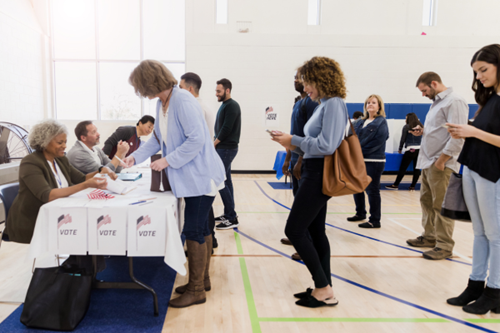 S1302 updates how commissioners in countywide highway districts are elected, bringing the process in line with how county commissioners are chosen across Idaho.
Under current law, the election process for highway district commissioners differs from the system used for other countywide officials. This legislation would standardize the process beginning with the 2028 election cycle. Like county commissioners, highway district commissioners would be required to live within the geographic district they represent, while still being elected by voters countywide. Candidates would file for office during the even-year May primary election, with primary winners advancing to the November general election. Additionally, for the 2026 election cycle, candidates for highway district commissioner will be allowed to declare a political party affiliation, and that affiliation will be listed on the general election ballot for voter information.
Aligning these election procedures with the well-established county commissioner process ensures highway district commissioners are selected on the broadest possible basis and through a system familiar to voters, not to mention during a typical election. IFBF policy states 109.2 states, “we support consolidation of all elections, including school bonds/levies to the May and November elections.” IFBF supports S1302.
------------------------------------------------------------------------------------
Resources Available to Follow During Session:
Legislative Website Homepage: HERE
2025 Legislative Session Bill Center: HERE
List of Senate Committee Assignments: HERE
List of House Committee Assignments: HERE
Current Senate Committee Agendas: HERE
Current House Committee Agendas: HERE
Watch Committee Meetings and Floor Sessions Live: HERE
Governor’s Bill Action and Legislative Communications: HERE
Still can't find what you are looking for? Find by topic:
- County Presidents & Board Information
- County Resource Page
- Delegate Form
- Discount Programs
- Discussion Meet
- Discussion Meet - High School
- Education Programs
- Events
- Excellence Award (YF&R)
- Expense Voucher
- Flickr- Photos
- Gem State Producer
- High School Discussion Meet
- High School Speech Contest
- Hope in Idaho Ag
- House of Delegates Credentials Form
- IFBF Board of Directors
- IFBF Staff
- Insurance
- Issue Advisory
- Legislative Action Program
- Legislative Issues
- Library
- MAC Trailer
- Magazines
- Map My Benefits
- Member Benefits
- Member Discount
- Membership Application
- Mental Health Resources
- Mission Statement
- Moving Agriculture to the Classroom
- Newsletter Sign up
- News Releases
- News Room
- Open Range Law
- Photo Contest
Thank You to Our Partners


