
Capitol Reflections: 2026 Session, Issue 5
By: Idaho Farm Bureau Governmental Affairs
“I do not believe that the power and duty of the general government ought to be extended to the relief of individual suffering which is in no manner properly related to the public service or benefit. A prevalent tendency to disregard the limited mission of this power and duty should, I think, be steadfastly resisted, to the end that the lesson should be constantly enforced that, though the people support the government, the government should not support the people.” - President Grover Cleveland
Capitol Minute
To help our members be fully informed about the issues going on during the legislative session, there will be a short video each week in which our Governmental Affairs team highlights what is discussed in length in the Capitol Reflections Newsletter. We strongly encourage members to continue reading the newsletter to get the most information, but this video will help when you want a quick synopsis or to learn about the issues on the go.
Podcast - Audio Only
Direct to Consumer Bill Introduced
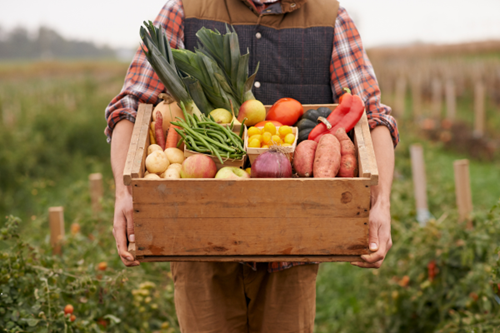 This week S1283 aimed at expanding opportunities for Idaho farmers, ranchers, and home-based producers to sell food directly to consumers was introduced in the Senate Agricultural Affairs Committee. Sponsored by Senator Todd Lakey (R-Nampa), S1283 reflects growing consumer demand for locally produced food and ensures regulations better match the scale and risk of these transactions instead of treating them like large commercial food operations.
S1283, one that Idaho Farm Bureau has worked on extensively, allows producers to sell homemade shelf-stable and perishable foods directly to informed end consumers without going through the full licensing and inspection system designed for grocery stores, restaurants, and major processors. These sales must take place entirely within Idaho and must be direct transactions between the producer (or a designated agent) and the final consumer. Products must be clearly labeled or accompanied by signage stating they are not subject to routine government inspection, along with the producer’s contact information and, when appropriate, ingredient and safe-handling information. The focus is on transparency and informed choice.
S1283 also clarifies how animal shares and certain custom meat arrangements may operate. Under an animal share, a consumer purchases an ownership interest in a live animal (or herd) before slaughter and then receives a portion of the meat from that animal. Because the consumer already owns the animal, this is not considered a retail meat sale, which aligns with the long-standing custom meat exemption. However, this bill clarifies that the amount of the animal share does not have to be limited to whole, half, or quarter and can instead be any amount of ownership and thus, varying amounts of meat received.
Importantly, it does not eliminate food safety laws. The Idaho Department of Health and Welfare would still have authority to investigate confirmed foodborne illness. Food that is adulterated, contaminated, or produced under grossly negligent conditions would remain subject to enforcement under existing law. The bill also does not protect producers from civil liability, meaning consumers could still pursue legal action in cases of negligence or misrepresentation.
The measure is limited in scope. It does not apply to restaurants, grocery stores, or wholesale distribution, and food produced under the act could not be used as an ingredient in commercial food establishments. Federal requirements for federally regulated products still apply. Existing meat inspection laws are unchanged, and raw milk and dairy production would continue to be governed under current Idaho statutes and rules.
Overall, the goal of the bill is about right-sizing regulation, supporting small producers, expanding local food access, and encouraging rural entrepreneurship while preserving the state’s ability to act when there is a genuine public health concern. IFBF policy 130.1 states, “We support legislation and policy that promotes and protects direct farm to consumer sales of locally grown agricultural products.” IFBF supports S1283.
Cloud Seeding Reporting Bill Introduced
 Legislation introduced this week by Senator Tammy Nichols (Senate Bill 1269) would update state law governing cloud seeding activities and establish authorization and reporting requirements for programs operating in Idaho. Cloud seeding has been used in several basins in the state for many years as a tool to help augment water supplies, support drought mitigation, and enhance snowpack.
S1269 clarifies the Idaho Water Resource Board’s authority to authorize and oversee cloud seeding programs and requires increased transparency around how and where cloud seeding occurs. The bill directs the Board to hold public meetings and publish annual reports detailing cloud seeding operations, including locations, methods used (such as ground generators, aircraft, or drones), materials applied, and observed outcomes like changes in snowpack. Operators would also be required to submit monthly reports during the operational season. In addition, the bill reinforces that any water generated through cloud seeding is subject to Idaho’s prior appropriation doctrine, limits liability for authorized cloud seeding activities (except in cases of gross negligence or willful misconduct), and restricts the use of state funds to basins where existing water supplies are insufficient to meet current needs for water rights, water quality, recreation, and fish and wildlife.
Idaho Farm Bureau policy strongly supports cloud seeding as a science-based tool to help mitigate drought and enhance surface and groundwater supplies. Our policy supports continued legislative and Idaho Water Resource Board involvement, ongoing investment in cloud seeding programs, partnerships with state, county, and private entities, and independent, sound science-based reviews of environmental impacts associated with cloud seeding materials. Farm Bureau also strongly supports protecting the privacy and property rights of individual landowners involved in the placement and operation of cloud seeding generators and opposes any group claiming ownership of water attributed to cloud seeding activities.
As this bill moves forward, Farm Bureau will be closely reviewing how the new reporting, public process, and oversight requirements align with our policy priorities – particularly ensuring that cloud seeding remains a practical, science-driven water management tool that respects private property rights, follows established water law, and continues to support Idaho agriculture’s long-term water security.
Wildlife Relocation and Testing Bill Introduced
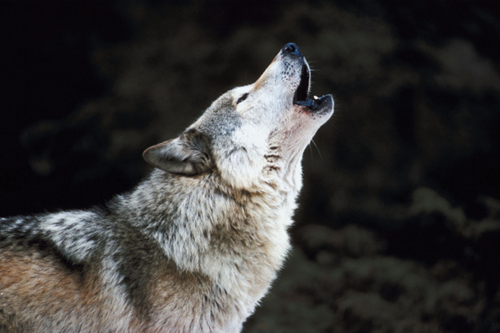 This week, the House Resources and Conservation Committee introduced H653, sponsored by Representative Doug Pickett (R–Oakley), to address wildlife relocation practices in Idaho.
Currently, landowners and leaseholders can be left in the dark when the Department of Fish and Game relocates wildlife near their property. In fact, the only statutory notification requirement applies to bighorn sheep relocations. H653 expands notification requirements to cover all wildlife relocations, with the exception of game fish and predatory wildlife. So our members are aware, predatory wildlife only includes coyotes, jackrabbits, skunks, weasels, starlings, raccoons, and rattlesnakes. The bill establishes different notification processes depending on the type of relocation.
For planned relocations defined as discretionary wildlife movements for purposes such as population augmentation. The Department must notify landowners and leaseholders within a five-mile radius of the release site, as well as the county commissioners. Notification may be made by mail, email, phone call, or direct message. If any affected party objects within ten days, the county commissioners must hold a public hearing and ultimately decide whether to approve or deny the relocation.
For emergency relocations, such as when an animal poses an immediate threat to human life, infrastructure, property, or enters a populated area, the Department may proceed with the relocation before notification occurs. In these cases, the Department must subsequently notify affected parties, track the animal for repeat incidents, and provide a report to the Legislature and the public detailing these emergency relocation activities.
H653 also strengthens animal health safeguards by expanding disease and strain testing requirements to apply to all big game animals that are imported, transported, sampled by the Department, or used for tracking purposes. This testing requirement does not currently apply to wolves. Additionally, the bill prohibits the release of captive-raised grizzly bears or wolves in Idaho unless such action is necessary to prevent Endangered Species Act listing or to support delisting efforts.
This legislation aligns with several Idaho Farm Bureau Federation policy positions, including Policies 64, 69.6, 69.7, 72.4, and 72.5. IFBF appreciates Representative Pickett for bringing this proposal forward and encourages members to contact their legislators in support of H653. IFBF supports H653.
------------------------------------------------------------------------------------
Resources Available to Follow During Session:
Legislative Website Homepage: HERE
2025 Legislative Session Bill Center: HERE
List of Senate Committee Assignments: HERE
List of House Committee Assignments: HERE
Current Senate Committee Agendas: HERE
Current House Committee Agendas: HERE
Watch Committee Meetings and Floor Sessions Live: HERE
Governor’s Bill Action and Legislative Communications: HERE
Still can't find what you are looking for? Find by topic:
- County Presidents & Board Information
- County Resource Page
- Delegate Form
- Discount Programs
- Discussion Meet
- Discussion Meet - High School
- Education Programs
- Events
- Excellence Award (YF&R)
- Expense Voucher
- Flickr- Photos
- Gem State Producer
- High School Discussion Meet
- High School Speech Contest
- Hope in Idaho Ag
- House of Delegates Credentials Form
- IFBF Board of Directors
- IFBF Staff
- Insurance
- Issue Advisory
- Legislative Action Program
- Legislative Issues
- Library
- MAC Trailer
- Magazines
- Map My Benefits
- Member Benefits
- Member Discount
- Membership Application
- Mental Health Resources
- Mission Statement
- Moving Agriculture to the Classroom
- Newsletter Sign up
- News Releases
- News Room
- Open Range Law
- Photo Contest
Thank You to Our Partners


