
Capitol Reflections: 2026 Session, Issue 4
By: Idaho Farm Bureau Governmental Affairs
“We don’t have a trillion-dollar debt because we haven’t taxed enough; we have a trillion-dollar debt because we spend too much.” - President Ronald Reagan
Capitol Minute
To help our members be fully informed about the issues going on during the legislative session, there will be a short video each week in which our Governmental Affairs team highlights what is discussed in length in the Capitol Reflections Newsletter. We strongly encourage members to continue reading the newsletter to get the most information, but this video will help when you want a quick synopsis or to learn about the issues on the go.
Podcast - Audio Only
Water Infrastructure Resolutions Moving Through Legislature
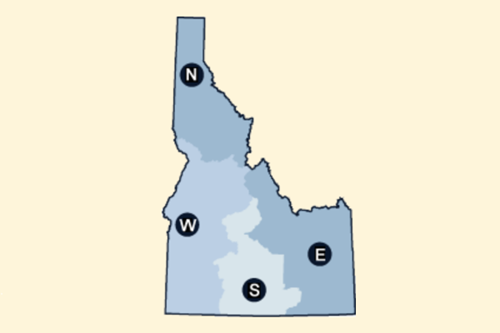 The Idaho Farm Bureau Federation is supporting four Senate Concurrent Resolutions currently moving through the Legislature (SCR 116, SCR 117, SCR 118, and SCR 119) which recognize the critical importance of water infrastructure investments across Idaho Water Resource Board Districts 1, 2, 3, and 4.
While Idaho’s water challenges vary widely by region, every part of the state depends on reliable, well-managed water resources. These resolutions highlight the foundational role water infrastructure plays in supporting Idaho agriculture, rural communities, tourism, and public safety. Together, the measures reflect a balanced, statewide approach to protecting aquifers, modernizing aging infrastructure, and ensuring long-term water reliability.
Each resolution focuses on region-specific needs. The measures acknowledge the importance of continued investment in District 1 to protect aquifers and local economies and prevent costly infrastructure failures. They recognize District 4’s role as the “water tower” of the Snake River system and support modernization projects essential to sustaining the Eastern Snake Plain Aquifer and fulfilling the 2024 Stipulated Mitigation Plan. The resolutions also highlight District 3’s importance in supporting public safety, Idaho’s dairy industry, and long-term agricultural water supply, while underscoring District 2’s need for investments in water storage, aquifer stabilization, and infrastructure to support population growth and regional economic stability.
From an agricultural perspective, these investments are both fiscally responsible and necessary. Proactive funding for water storage, conveyance systems, aquifer recharge, and infrastructure rehabilitation helps avoid far more costly emergency repairs and economic disruption down the road. Reliable water supplies remain essential to Idaho’s food production, processing sector, rural jobs, and the broader economy that depends on a stable agricultural industry.
Idaho Farm Bureau policy (IFBF Policy # 28) supports continued state investment in water infrastructure and collaborative, science-based water management. Farm Bureau members regularly engage with water managers and local districts across the state to better understand basin-specific challenges and project needs. The projects recognized in these resolutions reflect real, on-the-ground priorities that matter to producers and rural communities.
With these resolutions advancing through the Legislature, Farm Bureau continues to emphasize the importance of long-term, proactive water policy and financial investment that strengthens Idaho’s water systems and supports the future of agriculture statewide.
IFBF supports SCR 116, SCR 117, SCR 118, SCR 119.
Grizzly Bear Rule on Hold
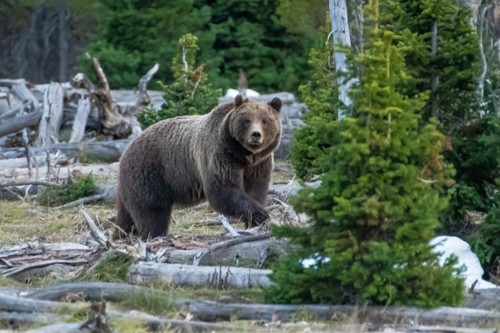 The U.S. Fish and Wildlife Service (FWS) has been granted an eleven-month extension to decide whether grizzly bears in the lower forty-eight should remain protected under the Endangered Species Act, delaying a ruling until December that could have reshaped how the species is managed in Idaho and neighboring states. In the final days of the Biden Administration, a proposed rule was released dissolving individual grizzly bear ecosystems and instead make the lower forty-eight essentially one big ecosystem, thus moving the delisting of grizzly bears even farther down the road.
The agency under the Trump Administration cited staffing shortages, administrative backlogs, and the complexity of grizzly bear rulemaking for the extension, along with the need to review updated science and more than 200,000 public comments. The pause could be beneficial for Idaho Farm Bureau and livestock producers because it keeps the rulemaking process open rather than locking in a final decision that moves the goalposts farther away. The extension provides additional time for state leaders, producers, and agricultural organizations to push for a management framework that gives Idaho more authority, improves conflict response tools, and better balances bear recovery with the realities of livestock depredation and rural safety. In December, IFBF members added policy 72.6 which states, “We support reversing the Federal Registry Rule by having each of the six grizzly bear recovery zones be managed separately rather than being managed as one.”
This announcement comes on the heels of SJM108 passing the full Senate last week and subsequently passing out of the House Resources and Conservation Committee on Thursday. That memorial directs the federal government to implement policy that would prevent livestock producers from being removed from grazing allotments when there is wildlife depredation. Idaho Farm Bureau continues to support SJM108 and will continually advocate for delisting of the grizzly bear and ESA reform.
Mandated E-Verify Legislation
 Legislation introduced this week (House Bill 584) would require broader use of the federal E-Verify system by all employers in Idaho. The bill was introduced in the House Business Committee by Rep. Jordan Redman (R–Coeur d’Alene) and would mandate compliance by employers beginning July 1, 2026. The only exclusion in the legislation applies to the relationship between a hiring party and the employees of an independent contractor performing work for that party.
Farm Bureau members support the rule of law and lawful employment practices. Nonetheless, this proposal raises important concerns for agriculture, particularly given the ongoing workforce shortages facing farms, ranches, and dairies across the state. Farmers are already operating in an extremely tight labor market, and any policy change that affects workforce availability deserves careful consideration.
The fact is, Idaho agriculture depends on people and on policy certainty. For more than three decades, agriculture has operated in a broken federal immigration system that provides limited, costly, and often unworkable legal pathways for hiring the workers needed to plant, harvest, milk, and process food. Mandating E-Verify at the state level, prior to meaningful federal immigration reform, risks further destabilizing an already fragile agricultural workforce.
Farm Bureau wants to be clear in our message: farmers are not seeking loopholes or special treatment; they are seeking workable, legal solutions that allow them to comply with the law while meeting real-world labor needs. Asking farmers and ranchers to shoulder additional enforcement responsibilities, without fixing the underlying labor system, is unrealistic and counterproductive. Workforce instability ultimately threatens food security, farm viability, and rural economies.
The practical reality of mandating E-Verify for all employers in Idaho raises additional concerns. Estimates suggest that tens of thousands of workers in the state’s agricultural and food sectors currently do not have legal work authorization. Requiring employers to verify every employee could force farms, ranches, dairies, and every other type of business to immediately replace these workers. This as a time when Idaho’s unemployment rate is only 3.6%, meaning there simply are not enough workers available to fill these jobs. Without a stable, legal workforce, many operations could face reduced production, lost revenue, and even closures, which would ripple through rural communities and threaten the state’s food supply. This demonstrates that an E-Verify mandate, without concurrent federal reform, is not only impractical but could have severe unintended consequences for Idaho agriculture.
Mandated E-Verify use may be part of a broader solution to our immigration and labor challenges, but it cannot proceed a comprehensive federal reform of immigration and workforce laws. Farm Bureau policy (AFBF Policy #136.1.18) supports immigration reform and modernization of the H-2A visa program to meet the needs of today’s agricultural industry before mandating E-Verify for agricultural employers.
Secure borders and strong agriculture are not competing values; both are essential to Idaho’s future. Farm Bureau will continue to advocate for practical, durable solutions that strengthen the rule of law while protecting the long-term viability of Idaho agriculture.
IFBF opposes H584 as written.
Tax Conformity Moves Forward
 Each year, one if the first bills is the annual tax conformity bill. As the name implies, this bill makes changes to Idaho tax laws so they conform with any changes to federal tax laws over the past year. Taxpayers can then avoid keeping two sets of books, one for state tax laws and another for federal tax laws. Idaho typically conforms with any changes in federal tax law to help keep compliance as simple as possible for taxpayers.
This year, due to the sweeping tax changes that were included in President Trump’s One Big Beautiful Bill (OBBB), there has been some angst within the legislature whether Idaho could afford to fully conform or not. It appears the compromise has been worked out as H559 shot through the House this week and was also approved in the Senate Local Government and Taxation Committee on Thursday.
It is important to finalize the conformity bill as quickly as possible since accountants are already busy working on Idahoan’s taxes and they need to know what the law says so they can be accurate. Here is a brief rundown on what the bill does:
H559 conforms to almost every tax provision in the OBBB, including making permanent the individual and corporate income tax cuts that were reduced temporarily during President Trump’s first administration.
H559 does include two exceptions to full conformity: 1. Bonus depreciation, which Idaho has historically not conformed to; and 2. Research & Experimentation (R&E) expenditures incurred from 2022-2024 already being amortized will continue to the end of their 5-year amortization schedule. Any R&E expenditures from 2025 and forward will conform to OBBB.
It appears that H559 will be approved on the Senate floor and signed by the Governor early next week so tax professionals and taxpayers alike will finally know what the tax laws are for last year’s taxes. H559 is sponsored by Senator Scott Grow (R-Eagle), Senator Doug Ricks (R-Rexburg), Rep Jeff Ehlers (R-Meridian) and Rep David Cannon (R-Blackfoot).
------------------------------------------------------------------------------------
Resources Available to Follow During Session:
Legislative Website Homepage: HERE
2025 Legislative Session Bill Center: HERE
List of Senate Committee Assignments: HERE
List of House Committee Assignments: HERE
Current Senate Committee Agendas: HERE
Current House Committee Agendas: HERE
Watch Committee Meetings and Floor Sessions Live: HERE
Governor’s Bill Action and Legislative Communications: HERE
Still can't find what you are looking for? Find by topic:
- County Presidents & Board Information
- County Resource Page
- Delegate Form
- Discount Programs
- Discussion Meet
- Discussion Meet - High School
- Education Programs
- Events
- Excellence Award (YF&R)
- Expense Voucher
- Flickr- Photos
- Gem State Producer
- High School Discussion Meet
- High School Speech Contest
- Hope in Idaho Ag
- House of Delegates Credentials Form
- IFBF Board of Directors
- IFBF Staff
- Insurance
- Issue Advisory
- Legislative Action Program
- Legislative Issues
- Library
- MAC Trailer
- Magazines
- Map My Benefits
- Member Benefits
- Member Discount
- Membership Application
- Mental Health Resources
- Mission Statement
- Moving Agriculture to the Classroom
- Newsletter Sign up
- News Releases
- News Room
- Open Range Law
- Photo Contest
Thank You to Our Partners


