
Capitol Reflections: 2026 Session, Issue 3
By: Idaho Farm Bureau Governmental Affairs
"So great is the regard of the law for private property, that it will not authorize the least violation of it; no, not even for the general good of the whole community." - William Blackstone
Capitol Minute
To help our members be fully informed about the issues going on during the legislative session, there will be a short video each week in which our Governmental Affairs team highlights what is discussed in length in the Capitol Reflections Newsletter. We strongly encourage members to continue reading the newsletter to get the most information, but this video will help when you want a quick synopsis or to learn about the issues on the go.
Podcast - Audio Only
Export Fuel Tax Joint Memorial Introduced
 A proposal being discussed in the Utah Legislature could significantly increase fuel costs for Idaho families, farmers, and businesses by creating a new tax on fuel refined in Utah but exported for use in other states. A lot of which is destined for Idaho. Because Idaho has no in-state petroleum refineries, we rely heavily on Utah refineries for our transportation fuels, importing roughly 70,000 barrels, or nearly 3 million gallons, per day. The Utah plan would reduce the fuel tax paid by Utah consumers while imposing a new 23.9-cent-per-gallon tax on exported fuel to make up the difference, effectively shifting an estimated $250 million per year in transportation funding costs onto out-of-state fuel users, primarily Idahoans.
For Idaho agriculture, freight, small businesses, and households, this would mean higher operating and transportation costs with no benefit to Idaho’s own infrastructure. Idahoans already pay a 32-cent-per-gallon state fuel tax to support our roads and bridges. That total does not include the federal tax and other fees. Under this proposal, fuel used here could face a combined tax burden of more than 75 cents per gallon, with a significant share of that revenue flowing to Utah instead of being invested locally. Beyond the economic hit, the policy raises serious interstate fairness and legal concerns, as taxing fuel based on its destination would violate long-standing principles governing interstate commerce and set a troubling precedent for other states.
More fundamentally, Article 1, Section 9, clause 5 of the US Constitution states: “No tax or duty shall be laid on articles exported from any state.” Clearly this proposed export tax is in direct violation of the US Constitution, and Utah would lose in court. However, any victory in court would require Idahoans to pay not only court costs, but potentially the export tax while the case drags on through the courts if an injunction is not granted.
To send a strong, preliminary message to Utah, the House introduced HJM12 calling on all states to refrain from imposing unconstitutional taxes on a neighboring state and instead continue to collaborate in good faith on all transportation needs. The joint memorial was sent straight to the second reading calendar, meaning the legislature is intending for this to move through the process as quickly as possible to ensure Utah gets the message. IFBF will continue to monitor the progress of this Utah proposal and will ensure our members stay in the know with what could be affecting their operations.
While IFBF supports HJM12, if any of our members have friends, relatives, or contacts who are in or involved with the Utah legislature, we strongly encourage you to reach out and voice the unconstitutionality of the proposed tax and how it would seriously damage Idaho’s agricultural economy.
Domestic Well Clarification Bill
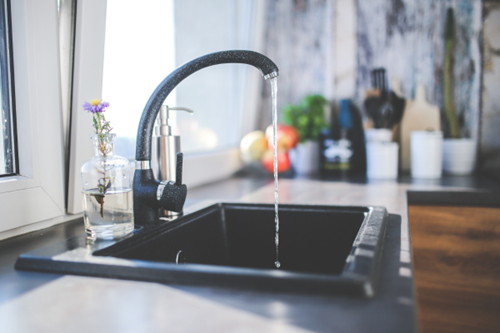 Legislation clarifying Idaho’s domestic well exemption passed the Senate this week and will now move to the House for consideration. Senate Bill 1222 builds on reforms enacted during the 2025 legislative session and is intended to provide clarity and certainty as those changes are implemented.
Last year, the Legislature passed S1083a, which updated Idaho’s domestic use exemption to better manage growing demands on limited water resources while preserving the exemption for Idaho homeowners. That legislation addressed how domestic exempt wells are used in subdivisions, coordinated water considerations with land-use planning, and established new safeguards to protect existing water rights.
S1222 does not change the policy direction set last year. Instead, it makes targeted clarifications to ensure the law is applied as intended. The bill defines “subdivision,” for purposes of the domestic use exemption statutes, as a development with five lots. It also clarifies that the subdivision-related limitations and planning provisions adopted in 2025 apply only to subdivisions with final applications filed on or after July 1, 2025. These clarifications help avoid confusion and ensure the law is applied prospectively, rather than retroactively.
These updates are important for landowners, water users, developers, and local governments as Idaho continues to grow. By clearly defining terms and applicability, S1222 provides predictability and helps ensure consistent implementation of last year’s reforms, while continuing to protect existing water rights.
Idaho Farm Bureau policy #29 supports thoughtful reform of the domestic use exemption, and Farm Bureau was actively engaged in the stakeholder process that led to the passage of S1083a. We view S1222 as a reasonable and necessary follow-up to that work.
Idaho Farm Bureau will continue to monitor the legislation and engage with lawmakers as it moves through the process. IFBF supports S1222.
Temporary Rules
 This week H539 was introduced in the House State Affairs Committee on a unanimous vote. The purpose of H539 is to ensure that the negotiated rulemaking process is used whenever possible and temporary rules are used primarily in emergency situations.
Negotiated rulemaking is the preferred method as it ensures the regulated community has the opportunity to participate in the rulemaking process. This allows for greater understanding and collaboration between those administering the rules, and those complying with the rules. Through this give-and-take process, the proposed rules are typically more effective in accomplishing their objective, while avoiding unnecessary burdens or overly restrictive methods.
H539 is a word-for-word copy of S1076a from last session. It was unanimously adopted in the Senate, and towards the end of the session it was amended in the House with some language that pertained to rules, but had nothing to do with the purpose of the bill. Later, when it was sent back to the Senate, they did not agree to the unrelated amendments, so it died.
H539 provides some common-sense sideboards as to when temporary rules are appropriate, and will ensure that agencies do not abuse the system by continually using temporary rules that circumvent legislative oversight of the rulemaking process. Rep Jeff Ehlers (R-Meridian) is the sponsor of H539. IFBF supports H539.
Depredation Joint Memorial Introduced
 SJM108 was introduced this week urging Congress and the Administration to protect livestock producers who report losses from wolves, grizzly bears, and other depredating wildlife.
Increasingly, ranchers who graze on U.S. Forest Service or Bureau of Land Management allotments hesitate to file depredation claims through the state out of fear that federal agencies could modify or revoke their grazing permits on federal land. As the legislature has purposefully appropriated money to deal livestock depredation, it is counterproductive to the success of those financial programs to have the federal government claim the best course of action is preventing grazing where depredations have occurred.
SJM108 calls for clear federal direction to ensure that reporting wildlife depredation cannot be used as a basis for reducing or canceling grazing privileges, helping ensure producers can document losses without risking their grazing allotments and allowing Idaho’s depredation programs to function as intended. Senator Todd Lakey (R-Nampa) and Representative Judy Boyle (R-Midvale) are the sponsors of the memorial. IFBF supports SJM108.
------------------------------------------------------------------------------------
Resources Available to Follow During Session:
Legislative Website Homepage: HERE
2025 Legislative Session Bill Center: HERE
List of Senate Committee Assignments: HERE
List of House Committee Assignments: HERE
Current Senate Committee Agendas: HERE
Current House Committee Agendas: HERE
Watch Committee Meetings and Floor Sessions Live: HERE
Governor’s Bill Action and Legislative Communications: HERE
Still can't find what you are looking for? Find by topic:
- County Presidents & Board Information
- County Resource Page
- Delegate Form
- Discount Programs
- Discussion Meet
- Discussion Meet - High School
- Education Programs
- Events
- Excellence Award (YF&R)
- Expense Voucher
- Flickr- Photos
- Gem State Producer
- High School Discussion Meet
- High School Speech Contest
- Hope in Idaho Ag
- House of Delegates Credentials Form
- IFBF Board of Directors
- IFBF Staff
- Insurance
- Issue Advisory
- Legislative Action Program
- Legislative Issues
- Library
- MAC Trailer
- Magazines
- Map My Benefits
- Member Benefits
- Member Discount
- Membership Application
- Mental Health Resources
- Mission Statement
- Moving Agriculture to the Classroom
- Newsletter Sign up
- News Releases
- News Room
- Open Range Law
- Photo Contest
Thank You to Our Partners


