
Capitol Reflections: 2026 Session, Issue 12
By: Idaho Farm Bureau Governmental Affairs
“You cannot help the poor by destroying the rich. You cannot lift the wage earner by pulling down the wage payer.” - President Abraham Lincoln
Capitol Minute
To help our members be fully informed about the issues going on during the legislative session, there will be a short video each week in which our Governmental Affairs team highlights what is discussed in length in the Capitol Reflections Newsletter. We strongly encourage members to continue reading the newsletter to get the most information, but this video will help when you want a quick synopsis or to learn about the issues on the go.
Podcast - Audio Only
Bills During the 2026 Session
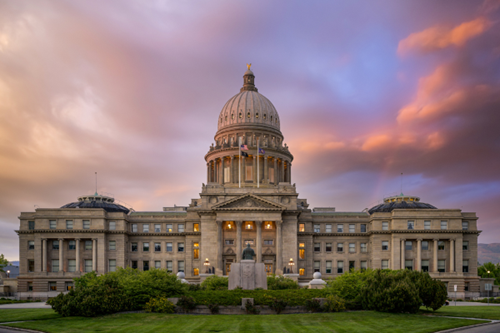 H539 - Temporary rules: ensures temporary rules are used primarily in emergency type situations and prevents a substantially similar temporary rule from being repromulgated except under certain narrowly crafted circumstances. IFBF Supported. LAW.
H620 – County boards, federal coordination: declares county commissioners have special expertise on subjects within their statutory responsibilities when coordinating planning efforts with federal agencies. IFBF Supported. LAW.
H650 – State sovereignty, jurisdiction: Declares a presumption that the state of Idaho has jurisdiction over all matters within the state unless the federal government can clearly demonstrate delegated powers in the US Constitution. IFBF Supported. LAW.
H664 – Speed limits, large vehicles: provides that speed limits for vehicles with five or more axles operating at a gross weight of more than 26,000 pounds shall be the same as for other vehicles. IFBF Supported. LAW.
H669 – Cloud seeding: enacts a full repeal of cloud seeding operations by any public or private entity. It also prohibits any type of weather modification activity within the state. IFBF Opposed. Filed in the Office of the House Chief Clerk.
H678a – Trapping, checking wolf traps: allows wolf trappers to inspect their trap remotely with transmitting cameras. IFBF Supported. LAW.
H700 – Aliens, unlawful employment: establishes a misdemeanor for employers, labor representatives, or employment agents to knowingly hire, continue employing, recruit individuals who are not lawfully present in the U.S. or authorized to work under federal law. IFBF Opposed. Held in Senate State Affairs.
H704 – Unauthorized workers: prohibits employment of illegal aliens and require employers to E-Verify an employee’s legal employment status as a condition of employment. IFBF Opposed. Held in Senate State Affairs.
H772 – Industrial hemp, violations: specifies that industrial hemp producers growing for fiber or grain may grow under the same regulatory limits as the federal regulations that govern industrial hemp production. IFBF Supported. LAW.
H823 – County fair boards: allows county fair boards that had not exceeded the 200,000-population threshold prior to January 1, 2024, to continue to operate as governing boards. Those counties that previously exceeded the threshold and transitioned their fair boards to advisory would be grandfathered in. IFBF Supported. Held in Senate Local Government and Taxation.
H842 – Taxing districts, budget limits: Amends existing law to revise provisions regarding certain limitations of budget requests by taxing district and to allow taxpayers to use the initiative process to lower taxes. IFBF Supported. Failed in the House.
H879 – Industrial hemp: establishments offering certain hemp products for retail sale are subject to the authorities of the existing Industrial Hemp Research and Development Act. IFBF Supported. LAW.
H895 – Data centers, water use, cooling: ensures the cooling function of data centers built in the future is either non-consumptive use of water, or uses water for such purposes from a municipal, water district, or water and sewer district system. IFBF Supported. LAW.
H911 – Electricity, new large loads: requires that any new large load may only receive service under a commission-approved contract, filed before service begins, and supported by a “no harm test” and other information sufficient to demonstrate that costs to service the load are not socialized across existing rate payers. IFBF Supported. LAW.*
H939 – Hunting Technology: regulates the use of thermal imaging, night vision, transmitting trail cameras, and drones for hunting. Provides exemptions, including for wolf and predator hunting, and for agricultural purposes. IFBF Supported. LAW.
HCR034 – Bear River compact: reaffirms Idaho’s rights under the Bear River Compact. IFBF Supported. ADOPTED.
HJM13 – Clean water act: requests Congress to support legislation to codify the United States Supreme Court decision in Sackett v Environmental Protection Agency, et al. IFBF Supported. ADOPTED.
HJM14 – Water storage: urges the federal government to partner with Idaho to fast-track feasibility studies for reservoir raises, support planning for new storage projects, explore creative financing options, and complete an updated basin study to identify priority projects. IFBF Supported. ADOPTED.
S1222 – Water, domestic use: amends existing law to revise provisions regarding the domestic use of water. Clarifies amendments made to this section of law last year. IFBF Supported. LAW.
S1224a – Slow moving vehicles: clarifies operators of slow-moving vehicles, construction equipment, and farm equipment need to turn off the road only when a safe or a size appropriate exit location becomes available. IFBF Supported. LAW.
S1241a – Protection of working animals: affirms the right to utilize working animals for mutual benefit and welfare and prohibits state or local governments from prohibiting the lawful use of working animals or working animal enterprises. IFBF Supported. LAW.
S1269 – Cloud seeding programs: updates Idaho’s cloud seeding statutes by placing clear definitions, authorization, and reporting mechanisms into law to improve transparency and accountability. IFBF Supported. LAW.
S1270a – Alternative animal protein labeling: establishes labeling requirements for alternative animal protein products sold in Idaho. Prohibits the use of traditional meat cut terminology on any lab-grown protein products. IFBF Supported. LAW.
S1283 – Direct-to-consumer foods: reduces regulation concerning the sale of homemade food and non-alcoholic drink products direct to consumers within the state of Idaho. Also reduces regulation by expanding the state custom meat exemption to be any portion size. IFBF Supported. LAW.
S1326a – Property rights protection: codifies historic 4th Amendment protections against government employee entry into privately owned lands except under certain circumstances. IFBF Supported. LAW.
1335a – State supported vet students: requires individuals who utilize state appropriated funds to attend veterinary school to return to work in Idaho for a period of four years and devote thirty percent of their annual working time, or six hundred hours, to agriculture animals for those four years. IFBF Supported. LAW.
S1356 – Highway districts, elections: changes the process by which highway district commissioners are elected in a countywide highway district to match the process by which county officials are elected. IFBF supported. LAW*
SCR116, SCR117, SCR118, and SCR119 – Water infrastructure projects: recognizes the hydrologic and economic importance of water infrastructure and resources in the four Idaho Water Resource Board Districts. IFBF Supported. ADOPTED.
SJM110 – Sugar Beets: urges federal action to protect Idaho’s sugar beet industry from unfair foreign trade practices. IFBF Supported. ADOPTED.
*At time of publication these bills have not been signed by the Governor.
Retail Hemp Products Bill Passes
 H879, relating to industrial hemp products, has passed the Legislature and now heads to the Governor for consideration.
The bill clarifies that establishments offering hemp products intended for human ingestion or inhalation are subject to Idaho’s existing industrial hemp laws. While Idaho law already governs hemp production and processing, there has been less clarity regarding products sold directly to consumers. H879 closes that gap by making clear that consumable hemp products must comply with the same legal standards already established in Idaho law.
The legislation does not expand the types of hemp products that are legal in Idaho, nor does it create a new licensing program or additional fees. Instead, it reinforces existing law by ensuring that products sold for ingestion or inhalation meet Idaho’s current definitions for lawful hemp products. Common products such as nonviable hulled hemp seed, hemp seed protein powder, and hemp seed oil are specifically excluded since they are already regulated by FDA.
Idaho Farm Bureau supported the legislation as a reasonable step to provide consistency throughout the hemp supply chain and ensure that existing law applies equally from production to retail sale.
Industrial Hemp Production Passes
 H772, relating to Idaho’s industrial hemp program, has passed the Legislature. The bill clarifies how “negligent violations” are treated for hemp producers growing hemp for grain or fiber.
Under the legislation, a hemp producer will not be considered to have committed a negligent violation if three conditions are met: the crop is produced solely for grain or fiber, the producer has made reasonable efforts to comply with Idaho law and the state hemp plan, and the crop does not exceed 1% total THC on a dry weight basis. The federal definition of hemp as cannabis containing no more than 0.3% THC remains unchanged.
The legislation recognizes the natural variability that can occur in THC levels due to environmental factors and provides reasonable protections for producers who are acting in good faith while growing hemp for industrial purposes rather than cannabinoid extraction. Farm Bureau authored and supported H772.
Bill to Protect Existing Ratepayers from Large New Energy Loads Passes
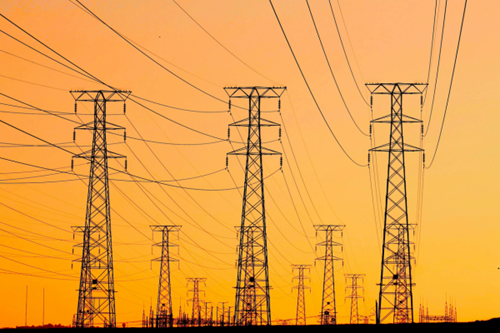 H911 has now passed the Legislature. The bill establishes a new framework for how Idaho utilities may serve very large new electric loads while protecting existing customers from bearing the cost of that growth.
Under the bill, new large electric loads – defined as those adding 50 megawatts or more over a five-year period – must pay the full cost of the infrastructure needed to serve them. This includes generation, transmission, substations, and distribution facilities. Before service may be provided, utilities must submit a contract to the Idaho Public Utilities Commission and demonstrate that serving the new load will not negatively affect the rates, reliability, or quality of service experienced by existing customers.
The legislation also requires financial security from new large-load customers to protect against stranded or unrecoverable costs if a project does not move forward or later reduces operations. In addition, the Commission will review these arrangements during future rate cases to ensure the new customer continues to pay the full cost of service over time.
Idaho Farm Bureau supported H911 because it reflects the principle that new large energy users should pay their full cost of service and that existing ratepayers, including farm and ranch families, should not subsidize the cost of new development. The bill represents a balanced approach that welcomes growth while ensuring that the costs of that growth remain with the customers creating it.
Property Owners Now Protected
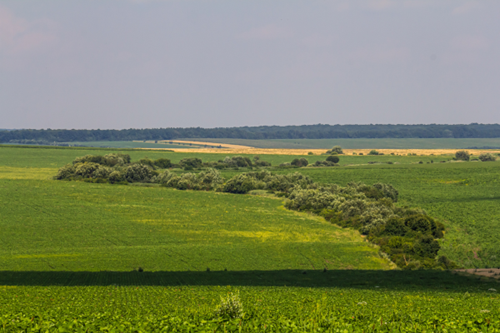 After several years of effort, S1326a is now law. As of March 31, no government employee can enter private property without the permission of the owner or a warrant, except under exigent circumstances. Exigent circumstances are specific, judicially recognized exceptions to the warrant requirement and are usually emergency type situations where life or property are in danger.
With Governor Little’s signature, the law became effective immediately.
Under the new law, when private property is recognized by normal citizens as not open to the public under Idaho’s trespass laws, government agents cannot enter either without permission or a warrant. This means any land that is cultivated is protected. Any land that is fenced with a legal fence and not adjacent to public land is protected. Land that is not fenced or cultivated must be posted with no trespassing signs or orange paint at close enough intervals that will put a reasonable person on notice that the land is not open to the public. Similarly, land that is fenced and adjacent to public land must post the fenceline between the private and public land to be protected.
There are a couple of important exceptions to the new law. There are government agents who are granted authority by either the Idaho Constitution or Idaho law to enter property to perform specific duties. This includes employees who administer water rights and/or maintain ditches, canals, or other water delivery conduits. Also, those who work for abatement districts or who control noxious weeds.
If you find anyone on your property who should not be there, we encourage you to take photos or video of the person if possible, and ask them for their name, who they work for, and why they are there. If possible, get a photo or video of the person’s vehicle, including their license plate. You are within your rights to ask them to leave, unless they have specific statutory authority to enter your property, such as water, abatement or noxious weed officials.
Be wise and prudent. DO NOT put yourself or your family members in danger. If necessary, walk away and allow the Sheriff to do their job. Do not threaten the person or escalate the situation. Let them know you are calling the Sheriff. Contact your county Sheriff and ask them to investigate the incident. Share the information you have gathered with them and allow them to do their job.
S1326a probably won’t prevent all unauthorized intrusions into your property, but it should be a significant deterrent. Please share any new incidents that you have with the IFBF Government Affairs team so we can keep track and address issues with government agencies as necessary. If you have any questions about this new law, please contact Government Affairs at 208-342-2688.
------------------------------------------------------------------------------------
Resources Available to Follow During Session:
Legislative Website Homepage: HERE
2025 Legislative Session Bill Center: HERE
List of Senate Committee Assignments: HERE
List of House Committee Assignments: HERE
Current Senate Committee Agendas: HERE
Current House Committee Agendas: HERE
Watch Committee Meetings and Floor Sessions Live: HERE
Governor’s Bill Action and Legislative Communications: HERE
Still can't find what you are looking for? Find by topic:
- County Presidents & Board Information
- County Resource Page
- Delegate Form
- Discount Programs
- Discussion Meet
- Discussion Meet - High School
- Education Programs
- Events
- Excellence Award (YF&R)
- Expense Voucher
- Flickr- Photos
- Gem State Producer
- High School Discussion Meet
- High School Speech Contest
- Hope in Idaho Ag
- House of Delegates Credentials Form
- IFBF Board of Directors
- IFBF Staff
- Insurance
- Issue Advisory
- Legislative Action Program
- Legislative Issues
- Library
- MAC Trailer
- Magazines
- Map My Benefits
- Member Benefits
- Member Discount
- Membership Application
- Mental Health Resources
- Mission Statement
- Moving Agriculture to the Classroom
- Newsletter Sign up
- News Releases
- News Room
- Open Range Law
- Photo Contest
Thank You to Our Partners


