
Capitol Reflections: 2026 Session, Issue 11
By: Idaho Farm Bureau Governmental Affairs
“Is life so dear or peace so sweet as to be purchased at the price of chains and slavery? Forbid it, Almighty God! I know not what course others may take, but as for me, give me liberty, or give me death!” - Patrick Henry
Capitol Minute
To help our members be fully informed about the issues going on during the legislative session, there will be a short video each week in which our Governmental Affairs team highlights what is discussed in length in the Capitol Reflections Newsletter. We strongly encourage members to continue reading the newsletter to get the most information, but this video will help when you want a quick synopsis or to learn about the issues on the go.
Podcast - Audio Only
Bad Rules Lead to Legislative Fix
 In Issue 9 of Capitol Reflections, there was an article about the very bad Fish and Game rules relating to advanced technology and how those rules would restrict those tools for wolf control. After that issue was sent out, the Senate Resource and Environment Committee had sent the rules to the floor with no adjustments. That left it up to the House Resource and Conservation Committee to make a change. After a robust discussion that indicated they were not going to approve the rule with the advanced technology, the conversation turned to a legislative fix so everyone could be happy.
On Monday, H939 was introduced by Representative James Petzke (R-Meridian) as the fix. Simply, this bill would keep the advanced technology restrictions for big game hunting and scouting. However, it not only approves the use of these tools for wolf hunting, but also for mountain lions and ensures they may also be used for other predatorial animals as well. Additionally, the bill allows for the use of these technologies for retrieving wounded gam animals or birds and monitoring traps. Lastly, it preserves advanced technology for monitoring buildings, agricultural operations, or other personal property. That wasn’t necessarily included in the rule, but it is always wise to ensure that type of thing is protected. IFBF supports the bill and appreciates the work of the sponsor to bring it forward.
As an additional note, these types of carveouts can create consternation when it comes to Fish and Game enforcing the law. If you encounter an issue with a conservation officer claiming you are inappropriately using the technology, please contact Dexton Lake.
S1326a Moves to Governor for His Signature
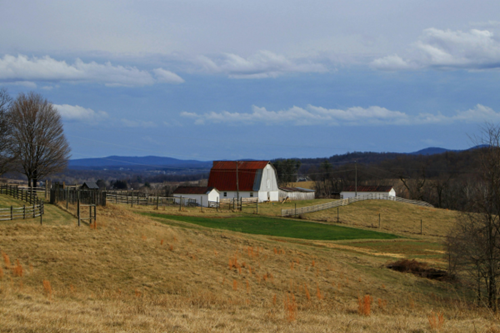 After years of working with stakeholders to craft a bill that will re-establish constitutionally guaranteed rights against government employees intruding into private property, S1326a has now been approved by the Legislature and is now awaiting Governor Little’s signature.
Farm Bureau members from across the state shared stories of government employees entering their property without permission or a warrant. In many cases these employees have caused damage to the property, have caused additional work or inconvenience for landowners, and in some instances have peered into windows causing alarm and frightening families.
S1326a was carefully crafted with input from several individual county prosecutors and Sheriffs to ensure that it will not restrict law enforcement in their important duties. Numerous adjustments were made as the bill went through the drafting process over the years to ensure that legitimate law enforcement activities will not be negatively impacted.
After hearing the numerous stories at the hearings, the legislature overwhelmingly supported the bill. The Senate passed S1326a on a vote of 30-5, while the House passed the bill on a vote of 65-3. There was very little debate in opposition of the bill, with most legislators considering it a common-sense bill that simply codifies long-standing constitutional protections against government intrusion.
Thanks to all Farm Bureau members who had conversations with your legislators, county Sheriffs, or any other members or stakeholders to help gather support for this important effort. S1326a was sponsored by Sen Jim Guthrie (R-McCammon), Sen Mark Harris (R-Soda Springs), Rep Judy Boyle (R-Midvale) and Rep Joe Alfieri (R-Coeur d’Alene). IFBF policy #155.3 states in part: “We support Idaho making it unlawful for any state or federal agency representatives to enter private property without the permission of the landowner or a warrant.” IFBF supports S1326a.
Local Governments Oppose Giving Citizens an Opportunity to Vote
 This week H842 was narrowly defeated on the House floor on a vote of 28-41. As reported a week ago, H842 proposed to allow cities with fewer than 30,000 inhabitants to increase property tax budget growth beyond the current 8% annual cap up to a maximum of 15% annual growth when those cities are experiencing rapid development. In return, citizens across the state would have the opportunity to utilize the existing local initiative process to reduce local property taxes if approved by voters.
Despite Cities desperately wanting the additional flexibility H842 would provide, in the end, they worked hard to defeat it simply because they fear what would happen if local taxpayers were given the ability to reduce their property taxes through an election. Associations for both cities and counties worked feverishly to oppose H842, and ultimately, they were successful in preventing local taxpayers from having the opportunity to seek a reduction in their property taxes.
H842 was drafted in direct response to cries from cities and counties that local governments need additional revenues. Both cities and counties already have the ability to go to the voters and ask them to raise their own taxes. However, instead of going to the voters, local governments prefer to have the legislature loosen the existing limits on property tax growth. If local taxpayers truly want their local governments to spend more money, they will be willing to vote to raise their taxes.
Although H842 is dead for this session, it illustrates an inescapable truth: taxpayers are much more likely to vote to reduce their taxes than they are to raise their taxes, and local governments know it. IFBF will continue to closely monitor any efforts to reduce current restrictions on future property tax growth.
Alternative Protein Labeling Bill Advances
 There have been efforts across the country to ban the sale of cell-cultured protein, also known as “fake meat” or lab-grown meat. Other states have instead adopted clear labeling requirements, so consumers know exactly what they are buying.
AFBF policy #345 is clear on this subject. It does not call for an outright ban, but it states in part: “we support prohibiting the use of commonly known and industry recognized “meat” terms in the labeling and advertising of all lab-grown alternatives.”
S1270a would require all lab-grown proteins offered for sale in Idaho to be labeled with the phrase “lab-grown,” “cell-cultivated,” or “cell-cultured.” This disclosure must be on the principal display panel of the package and in a font and style that is at least of equal prominence as the product name. Further, lab-grown meat is prohibited from using such terms such as steak, brisket, roast, tri-tip, loin, chops, or any other commonly and traditionally used “meat” terms.
The purpose of S1270a is primarily to ensure transparency so consumers know exactly what they are purchasing, and do not unwittingly purchase something they did not expect. S1270a passed the Senate on a vote of 34-0 and has now passed the House on a vote of 70-0. S1270a now heads to Governor Little for his signature. S1270a was sponsored by Sen Tammy Nichols (R-Middleton) and Rep Heather Scott (R-Blanchard). IFBF supports S1270a.
Data Center Water Use
 As interest in developing data infrastructure in Idaho increases, the Legislature is taking steps to address how these facilities fit within the state’s long-standing water management framework. H895, introduced by Speaker of the House, Representative Mike Moyle (R-Star), focuses on the growing use of water by large data centers and the potential impacts on Idaho’s water resources.
The intent language of the bill states that consumptive use of water for data centers may conflict with the local public interest, may run counter to water conservation efforts, and could negatively affect local economies, particularly when water is transferred outside the watershed where it originates. H895 is intended to guide the Idaho Department of Water Resources as it evaluates new water right applications or transfers associated with data center development.
In addition to these policy statements, H895 places a new limitation on water use for data centers. Beginning July 1, 2026, data centers that begin construction after that date may not use water for cooling as a consumptive use unless the water is provided through a municipal or public water system, such as a city or water district. This effectively restricts the use of privately held water rights for consumptive cooling purposes in new facilities.
The legislation does not prohibit data centers in Idaho, but it does establish clearer boundaries on how water can be used for these projects. Developers will need to plan accordingly, particularly in areas where water availability is already a concern.
Idaho Farm Bureau supports H895 as a balanced approach that promotes water conservation and encourages alternative technologies to improve water efficiency (see IFBF Policy #39.3). By prioritizing the responsible use of water, the bill helps safeguard supplies for agriculture and other existing uses.
Reaffirming Idaho’s Rights Under the Bear River Compact
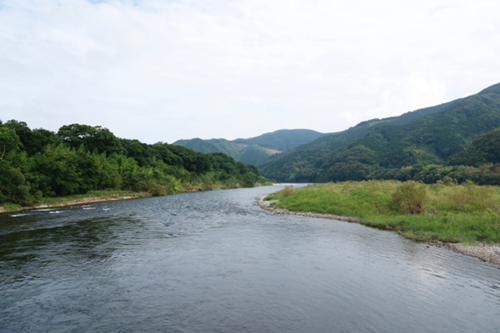 The Legislature has adopted House Concurrent Resolution 34 (HCR 34) which reaffirms Idaho’s water rights under the Amended Bear River Compact of 1980 and outlines a proactive approach to protecting and developing the state’s allocation. The Bear River is a vital resource for agriculture, communities, and recreation across southeastern Idaho, and the compact guarantees Idaho the “first right” to develop up to 125,000 acre-feet of water in the river’s Lower Division.
The resolution highlights the importance of actively developing that allocation to ensure it is not diminished over time. With increasing pressure from downstream demand and potential federal involvement, HCR 34 emphasizes that Idaho must move from passive entitlement to strategic development and management of its water resources.
To support this effort, the resolution directs investments in improved measurement and monitoring, including telemetry and stream gauging, and tasks the Idaho Water Resource Board with identifying and prioritizing water storage, infrastructure, and aquifer recharge projects. It also requires detailed reports this year outlining development opportunities, costs, and recommended next steps to secure Idaho’s long-term water supply.
Idaho Farm Bureau supports HCR 34, consistent with our policy to promote the development of water resources and infrastructure. Ensuring Idaho fully utilizes and protects its water rights is critical to the long-term success of agriculture and rural communities across the state.
Other Legislation That May Be of Interest
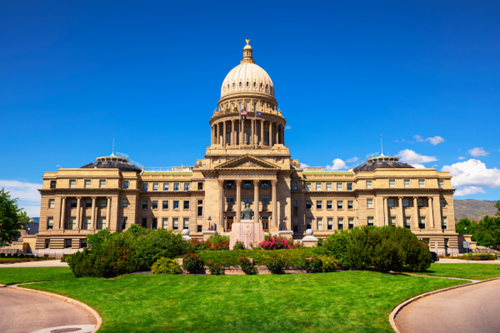 In addition to the legislation highlighted in this, and previous issues of Capitol Reflections, several other bills have been debated this session that may be of interest to some of our members due to their connection to agriculture, water, and natural resources. While Idaho Farm Bureau has not taken a formal position on the following pieces of legislation, we are providing a brief summary so members are aware of measures that could have a nexus to our industry. Members interested in learning more can view the full bill text, additional information, and status of the legislation on the Idaho Legislature’s website.
- H587 – Rangeland Improvement Funding Clarification
This legislation clarifies funding provisions related to the Idaho Rangeland Improvement Act passed in 2024. It specifies that funding for rangeland improvement projects is continuously authorized, regardless of the revenue source, allowing projects to be prioritized and completed more efficiently.
More information: H587 - H630 – Aerial Predator Control Permitting
This legislation amends Idaho Code related to the permitting of aircraft use for controlling unprotected or predatory animals. It incorporates existing administrative rule provisions into statute so that all related requirements are consolidated in one place.
More information: H630 - H662 – Milk and Cream Testing Authority
This bill clarifies that the Idaho State Department of Agriculture may test milk and cream for quality parameters used by buyers and sellers when determining price. It also confirms that the department, buyer, and seller each have the right to the test sample.
More information: H662 - H737 – Energy and Species Conservation Office Merger
This legislation merges the Governor’s Office of Energy and Mineral Resources (OEMR) with the Office of Species Conservation (OSC) in an effort to streamline administration and reduce bureaucratic duplication.
More information: H737 - H781 – Pest Control Authority (Rats)
This legislation amends Idaho Code to explicitly include rats as pests that county commissioners may act to control. It also reorganizes the existing pest list for improved clarity and consistency in statute.
More information: H781 - H789 – Coeur d’Alene Tribe Water Rights Settlement
This bill ratifies and implements the 2026 Coeur d’Alene Tribe Water Rights Settlement Agreement related to claims in the Coeur d’Alene–Spokane River Basin Adjudication. It also authorizes the Idaho Water Resource Board to appoint a local rental committee to facilitate operation of a water supply bank for leasing certain tribal water rights within the basin.
More information: H789 - H897 – Data Center Sales Tax Exemption Revisions
This legislation makes several changes to Idaho’s sales tax exemption for data centers, including adding new qualification criteria related to energy and water use, limiting the exemption primarily to internal servers, and capping eligibility at 20 years per project. It also modifies certain property tax provisions to avoid tax shifts, requires ongoing reporting by the Tax Commission, and allows projects already under construction to continue under prior provisions, subject to the new 20-year limit.
More information: H897 - HJM10 – Memorial Supporting Natural Sugar in School Lunches
This joint memorial urges Congress to support efforts to move away from artificial sweeteners in school lunches and instead utilize natural sources of sugar, such as sugar derived from crops like sugarbeets—an important commodity produced in Idaho.
More information: HJM10 - S1271a – Invasive Rat Management
This legislation addresses the growing presence of invasive Norway and roof rats in Idaho by designating them as public nuisances and aligning their treatment across existing laws governing invasive species and agricultural pests. The Idaho State Department of Agriculture would coordinate response efforts using existing authorities and resources.
More information: S1271 - S1304 – Ditch Easement Clarification
This legislation clarifies that ditch easements include the right to operate, maintain, repair, replace, or relocate facilities within the easement without requiring written permission from the landowner each time such work is necessary.
More information: S1304 - S1337 – Irrigation District Board Qualifications
This bill allows landowners in irrigation districts under 15,000 acres to serve on district boards if they own land within the division they represent and live in the same or an adjoining county. The change must be adopted by a two-thirds vote of the irrigation district’s board of directors.
More information: S1337 - SCR123 – Recognition of Rangeland and Pastoralists
This concurrent resolution recognizes the Governor’s 2026 proclamation supporting Idaho rangeland and pastoralists, highlighting the importance of rangeland management and those who depend on it.
More information: SCR123
------------------------------------------------------------------------------------
Resources Available to Follow During Session:
Legislative Website Homepage: HERE
2025 Legislative Session Bill Center: HERE
List of Senate Committee Assignments: HERE
List of House Committee Assignments: HERE
Current Senate Committee Agendas: HERE
Current House Committee Agendas: HERE
Watch Committee Meetings and Floor Sessions Live: HERE
Governor’s Bill Action and Legislative Communications: HERE
Still can't find what you are looking for? Find by topic:
- County Presidents & Board Information
- County Resource Page
- Delegate Form
- Discount Programs
- Discussion Meet
- Discussion Meet - High School
- Education Programs
- Events
- Excellence Award (YF&R)
- Expense Voucher
- Flickr- Photos
- Gem State Producer
- High School Discussion Meet
- High School Speech Contest
- Hope in Idaho Ag
- House of Delegates Credentials Form
- IFBF Board of Directors
- IFBF Staff
- Insurance
- Issue Advisory
- Legislative Action Program
- Legislative Issues
- Library
- MAC Trailer
- Magazines
- Map My Benefits
- Member Benefits
- Member Discount
- Membership Application
- Mental Health Resources
- Mission Statement
- Moving Agriculture to the Classroom
- Newsletter Sign up
- News Releases
- News Room
- Open Range Law
- Photo Contest
Thank You to Our Partners


