
Capitol Reflections: 2026 Session, Issue 10
By: Idaho Farm Bureau Governmental Affairs
“Those who would give up essential liberty, to purchase a little temporary safety, deserve neither liberty nor safety.” - Benjamin Franklin
Capitol Minute
To help our members be fully informed about the issues going on during the legislative session, there will be a short video each week in which our Governmental Affairs team highlights what is discussed in length in the Capitol Reflections Newsletter. We strongly encourage members to continue reading the newsletter to get the most information, but this video will help when you want a quick synopsis or to learn about the issues on the go.
Podcast - Audio Only
Property Rights Bill Advances
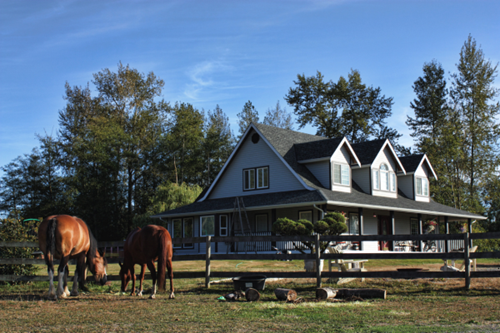 Many Farm Bureau members and other citizens took the time to testify in favor of S1326a in both the House and Senate Committees, several driving for hours to give their two-minute statement. Due to the egregious stories that they shared of government employees entering private property without permission, both committees overwhelmingly approved S1326a.
This week, the House State Affairs Committee heard several people from around the state share their stories. The Committee members quizzed Idaho F&G about the reason they need to enter property without landowner permission. They found their answers unpersuasive. F&G, Trout Unlimited and the Idaho Wildlife Federation testified in opposition to the bill, while a number of ordinary citizens testified in favor, sharing their personal experiences.
In the end, the committee voted 12-2 to send S1326a to the floor with a “do pass” recommendation. The two voting against were Rep Monica Church (D-Boise) and Rep Annie Haws (D-Boise).
S1326a requires government employees to secure permission before entering private land unless they have a warrant, or there are specific, “emergency” type circumstances that are recognized by courts. This is simply what the 4th Amendment has required for 234 years. Unfortunately, many government employees seem to believe that it does not apply to them. Despite having no statutory authority to enter private land, and just by virtue of their employment with the government, they believe they can go wherever they please to perform their “duty.” Legislators are not buying that.
S1326a will be voted on by the full house next week. It has already been approved in the Senate by a vote of 30-5. IFBF policy #155.3 states in part: “we support Idaho revising state law to make it unlawful for any state or federal representative to enter private property without the permission of the owner or a valid warrant.” IFBF supports S1326a.
Protection for Working Animals Nears Finish Line
 Idaho has a rich tradition of utilizing working animals across the state. From skidding logs with draft horses in North Idaho, to using dogs to guard sheep or herd cattle, working animals have been an integral part of our economy from before statehood.
Unfortunately, there are those who have never been near real animals that think they know better than those who work with and care for these animals every day. Across the nation there are efforts to ban rodeos, prohibit horse-drawn carriage rides, and stop the use of draft horses or working dogs. They claim they are acting on behalf of the animals’ welfare, but in reality, they have no more idea of what is good for an animal than a toddler knows about driving a car.
S1241a has been proposed to protect against potential over-zealous attempts to prohibit the use of working animals in Idaho in the future.
This week, the working animals’ protection bill was heard in the House Agricultural Affairs Committee. There was one individual opposed to the bill, and many in support, including IFBF. Ultimately, S1241a was approved on a unanimous voice vote. Subsequently, it was heard by the full House and was approved on a vote of 67-3. S1241a was previously approved in the Senate on a vote of 31-3. IFBF supports S1241a.
Updated Proposal Addressing New Large Energy Loads
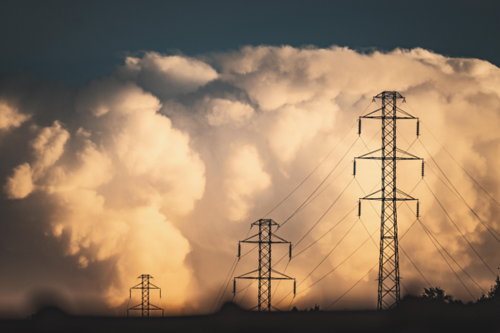 Legislation addressing how Idaho serves new large electricity users continues to evolve, with the introduction of H911. The bill, sponsored by Rep. Stephanie Mickelsen (R-Idaho Falls) and Rep. Mike Veile (R-Soda Springs), builds on earlier discussions this session and reflects an effort to strike a balance between protecting existing ratepayers and maintaining a workable regulatory framework as Idaho experiences continued economic growth and increasing energy demand.
H911 establishes a framework for how utilities may serve very large new electric loads, defined in the bill as those adding 50 megawatts or more over a five-year period. Before service can be provided, utilities must submit a service contract to the Idaho Public Utilities Commission for approval. As part of that process, the utility must demonstrate that serving the new load will not negatively impact the reliability or quality of service provided to existing customers.
A key component of the legislation is the requirement that new large loads pay their full cost of service. This includes the costs associated with generation, transmission, substations, and distribution infrastructure that would not otherwise be necessary but for the new customer. By clearly assigning these costs to the new load, the bill aims to prevent existing ratepayers from subsidizing large-scale energy users.
H911 also includes additional safeguards to protect against long-term risks. The bill requires financial security from new large load customers to ensure that utilities and their existing customers are protected from stranded or unrecoverable costs if a project does not materialize as expected. In addition, the legislation requires the Commission to review these service arrangements during future rate cases and make adjustments if necessary to ensure that the full cost of service continues to be appropriately assigned.
This proposal comes after earlier legislation introduced this session offered different approaches to addressing large energy loads. Those earlier bills ranged from more prescriptive frameworks to proposals that largely codified existing regulatory practices. H911 reflects a middle-ground approach, combining clear policy direction with flexibility for regulators to implement the requirements within established processes.
As Idaho continues to attract energy-intensive industries, policymakers are focused on ensuring that growth does not result in higher electricity costs for existing customers. Idaho Farm Bureau policy supports this principle, emphasizing that new large energy loads should bear the full, direct costs of the infrastructure required to serve them. H911 aligns with this approach, and we will continue to monitor its progress as it moves through the legislative process. IFBF supports H911.
Slow Moving Vehicle Heads to House Floor for Final Vote
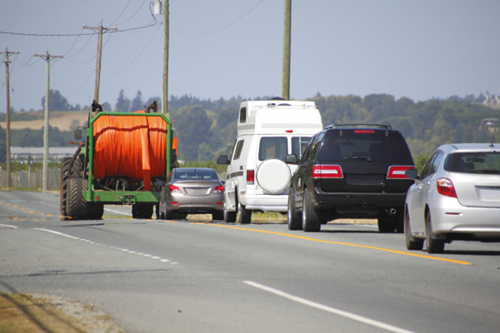 S1224a has made it out of the House Transportation and Defense Committee. As a reminder, the bill states that the driver of farm and construction equipment can continue to block traffic until a safe and reasonable designated turnout or location exists for the driver to temporarily exit. This bill gives producers a defense for not pulling over, especially when three or more vehicles stack up behind them, rather than the current law where the producer loses every time. We are grateful to our members who have expressed support for this bill, particularly Miguel Villafana who came in and testified before the committee in support of the bill. IFBF supports S1224a.
Direct to Consumer Bill Heads to the Governor
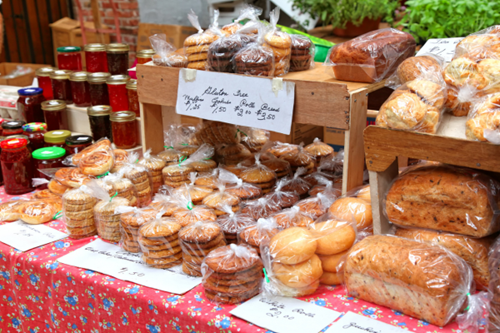 S1283 has passed the legislature and is headed to the governor’s desk for signature. The bill expands opportunities for Idaho farmers, ranchers, and home-based producers to sell both shelf-stable and perishable foods directly to informed consumers without going through full retail licensing and inspection requirements, provided sales occur entirely within Idaho and include clear labeling and transparency. It also clarifies that animal shares may be sold in flexible ownership portions, aligning with existing custom meat exemptions. Importantly, S1283 maintains key food safety protections by preserving the authority of the Idaho Department of Health and Welfare to investigate foodborne illness and enforce laws against unsafe or negligently produced food, while keeping existing rules for restaurants, wholesale distribution, meat inspection, and dairy production intact. We are grateful for the collaboration of IFBF members in making this possible and look forward to it becoming Idaho law. IFBF supports S1283.
------------------------------------------------------------------------------------
Resources Available to Follow During Session:
Legislative Website Homepage: HERE
2025 Legislative Session Bill Center: HERE
List of Senate Committee Assignments: HERE
List of House Committee Assignments: HERE
Current Senate Committee Agendas: HERE
Current House Committee Agendas: HERE
Watch Committee Meetings and Floor Sessions Live: HERE
Governor’s Bill Action and Legislative Communications: HERE
Still can't find what you are looking for? Find by topic:
- County Presidents & Board Information
- County Resource Page
- Delegate Form
- Discount Programs
- Discussion Meet
- Discussion Meet - High School
- Education Programs
- Events
- Excellence Award (YF&R)
- Expense Voucher
- Flickr- Photos
- Gem State Producer
- High School Discussion Meet
- High School Speech Contest
- Hope in Idaho Ag
- House of Delegates Credentials Form
- IFBF Board of Directors
- IFBF Staff
- Insurance
- Issue Advisory
- Legislative Action Program
- Legislative Issues
- Library
- MAC Trailer
- Magazines
- Map My Benefits
- Member Benefits
- Member Discount
- Membership Application
- Mental Health Resources
- Mission Statement
- Moving Agriculture to the Classroom
- Newsletter Sign up
- News Releases
- News Room
- Open Range Law
- Photo Contest
Thank You to Our Partners


