
As U.S. wheat acres hit record low, Idaho holds steady
Idaho Farm Bureau Federation
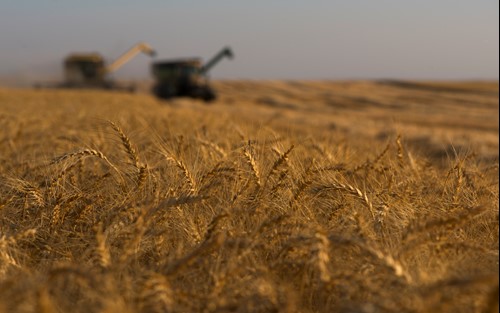 POCATELLO – As total U.S. wheat acres have continued to decline for the past three decades, Idaho wheat acres have remained stable.
Before 1996, this country’s total wheat, corn and soybean acres were about the same every year, ranging between 62 million and 71 million each. But since then, soybean and corn acres have continued to increase, while wheat acres have headed the other direction.
Except in Idaho.
The state’s farmers plant about 1.2 million acres of wheat each year.
According to USDA’s March 31 Prospective Planting report, U.S. farmers plan to plant 95 million acres of corn and 85 million acres of soybeans in 2026.
The nation’s farmers plan to plant 44 million acres of wheat, down 3 percent from last year and, if realized, it will be the lowest U.S. wheat acreage since records began in 1919.
Meanwhile, Idaho farmers plan to plant 1.24 million acres of wheat this year, up 2 percent from 1.22 million acres last year.
“Acres planted to wheat in Idaho have remained steady over the past 40 or so years, even as wheat acres have been replaced by soybeans and corn across the country,” says Britany Hurst Marchant, executive director of the Idaho Wheat Commission.
Why is this happening?
For starters, Idaho is not a soybean state and most of the corn grown here – about 350,000 acres per year – goes to feed for dairies.
It’s also due to the fact that wheat is an essential rotation crop throughout much of the state, says Burley farmer Wayne Hurst, a member of the wheat commission.
Wheat breaks up the disease and wheat cycle for other major crops in Idaho, such as potatoes, sugar beets, alfalfa and dry beans, he says. It also adds organic matter to the soil.
“It’s a great rotation crop. It fits well in Idaho,” Hurst says.
“It may not be the cash crop on the farm, but wheat allows crop protection tools to be used on other crops, restoring to the soil the nutrients other crops pull from it,” Marchant says.
“Wheat is an excellent rotation to high-value crops like potatoes and sugar beets,” says North Idaho farmer Bill Flory. “Wheat’s a really good fit in Idaho.”
Idaho’s roughly 2,600 wheat farmers typically produce about 100 million bushels of wheat per year and the quality is consistent, which makes the state an attractive place for national and internation markets, Flory says.
“Idaho farmers know how to grow a consistent, quality wheat crop and the market realizes that,” he says.
Idaho wheat industry leaders say the fact that soybeans and corn have genetically modified (GMO) traits is a major reason those crops have outpaced wheat acres in the United States.
Corn and soybean varieties with GMO traits were commercially released in 1996, but there are no commercial GMO wheat varieties.
Because crops with GMO traits can be easier and more profitable to grow, they say, it makes corn and soybeans more attractive to many farmers in areas where all three crops can be grown. In addition, they add, GMO corn and soybeans have expanded the geographic area that can produce those crops, so they have become options to farmers who historically only grew wheat.
Idaho also has a higher percentage of its wheat crop under irrigation than any other state.
Add in southern Idaho’s dry desert climate, which keeps disease and pest issues to a minimum compared to many other wheat-producing areas.
Wheat is grown in 42 of Idaho’s 44 counties and ranks as the state’s No. 2 crop, behind potatoes, when it comes to farm-gate receipts, which is the revenue a farmer receives for their commodity.
In most years, Idaho leads the nation or ranks No. 2 in average wheat yields.
Idaho usually ranks between No. 5 and No. 7 nationally in total wheat production and five of the six classes of wheat are grown in Idaho.
There are a lot of factors that keep wheat acres consistent in Idaho, Flory says.
Mostly though, Marchant says, “the success of Idaho's wheat crop is a direct result of investments of farmer assessment dollars into research, breeding, and variety development. Those investments have returned to farmers the ability to grow more wheat using less land, fewer resources, and fewer inputs without sacrificing quality in any way.”
Favorable climatic conditions in Idaho, coupled with an adequate and mostly predictable supply of irrigation water from the state’s reservoir systems, make the state a great place to produce wheat, industry leaders say.
Idaho has more acres of wheat grown under irrigation than any other state in the country “and the state’s dryland areas generally receive enough moisture through precipitation to produce a really nice crop of wheat,” Marchant says.
Because of this, Idaho typically has the highest wheat yields in the country, she says. According to USDA, Idaho’s average wheat yield in 2025 was 93.5 bushels per acre – the state’s record is 96.6 bushels per acre – while the average U.S. wheat yield last year was 53.3 bushels per acres.
All of these factors combine to make Idaho a consistent supplier of quality wheat and the market knows that, Flory says.
“The reliability and superiority of Idaho's wheat crop keeps the domestic and overseas demand high for Idaho wheat, and that is entirely because of farmer investments in market development, research, and wheat breeding, and the farmer's complete commitment to growing the very best wheat that can be grown,” Marchant says.
The bottom line is that Idaho farmers put out a high-quality crop that’s in demand, Hurst says.
“Wheat’s just been a steady influence throughout Idaho for the last 100 years or so,” he says.
Still can't find what you are looking for? Find by topic:
- County Presidents & Board Information
- County Resource Page
- Delegate Form
- Discount Programs
- Discussion Meet
- Discussion Meet - High School
- Education Programs
- Events
- Excellence Award (YF&R)
- Expense Voucher
- Flickr- Photos
- Gem State Producer
- High School Discussion Meet
- High School Speech Contest
- Hope in Idaho Ag
- House of Delegates Credentials Form
- IFBF Board of Directors
- IFBF Staff
- Insurance
- Issue Advisory
- Legislative Action Program
- Legislative Issues
- Library
- MAC Trailer
- Magazines
- Map My Benefits
- Member Benefits
- Member Discount
- Membership Application
- Mental Health Resources
- Mission Statement
- Moving Agriculture to the Classroom
- Newsletter Sign up
- News Releases
- News Room
- Open Range Law
- Photo Contest
Thank You to Our Partners


