
Ag department continues to attack Japanese beetles
By Sean Ellis
Idaho Farm Bureau Federation
POCATELLO – The Japanese beetle, a non-native invasive pest that attacks a wide variety of crops, has popped up in Acequia, which is near Rupert and is located in the heart of Idaho farm country.
That’s the bad news. The good news is that only five of the beetles have been found there so far.
Idaho State Department of Agriculture officials are taking an aggressive approach to try to eradicate the pest from that area, as they do in all areas where the beetle pops up from time to time.
“We take an aggressive approach to make sure we don’t see those numbers boom before we can actually handle the situation,” said Vene Stewart, a pest survey and detection specialist who is helping lead ISDA’s attack on the beetles.
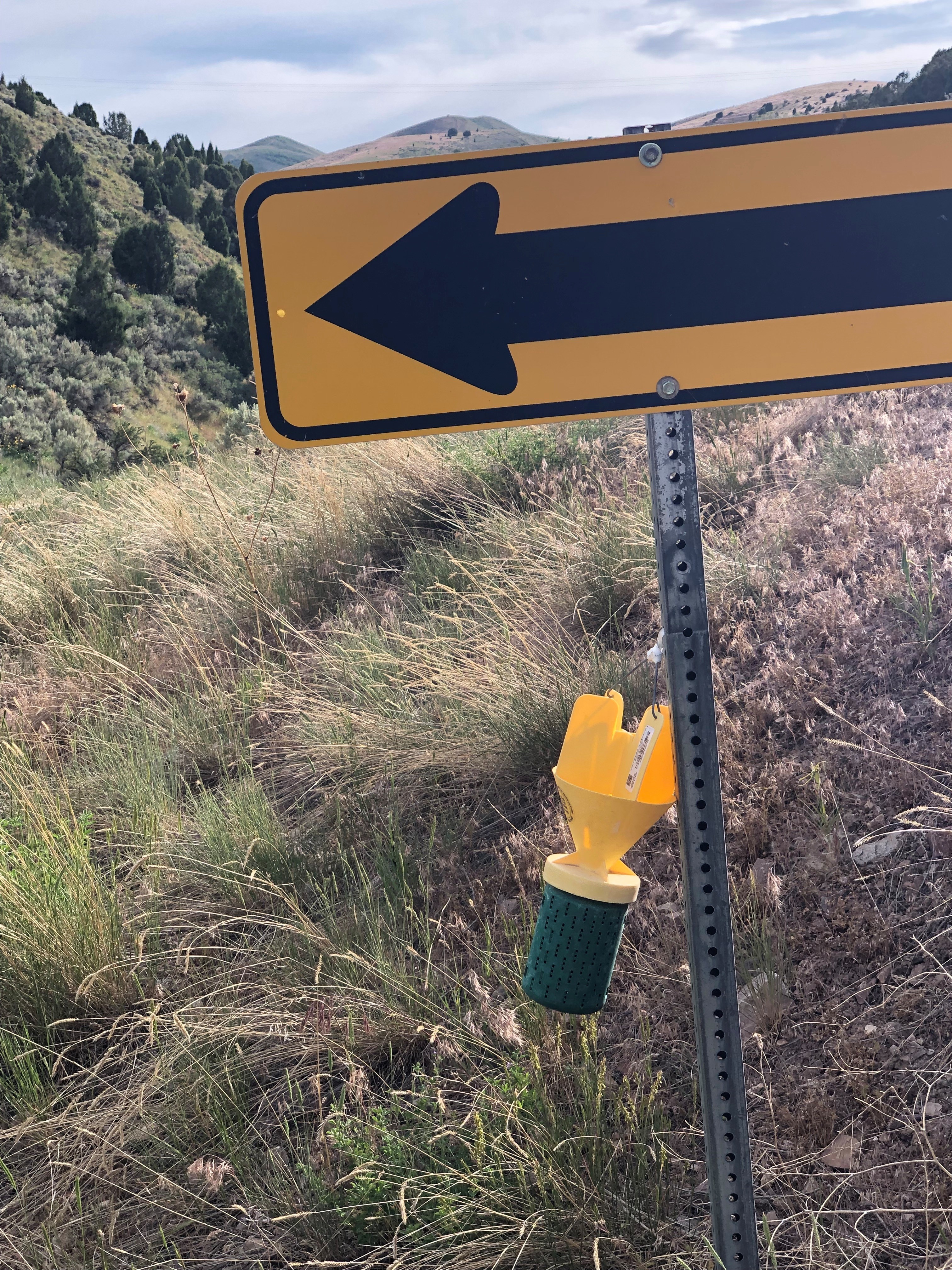
The ISDA currently has 800 Japanese beetle traps located around the Rupert area in an effort to determine where the pest might be present.
The beetle is a highly destructive plant pest that feeds on more than 300 different agricultural and ornamental plants. Because it is a major threat to the state’s agricultural industry, the ISDA surveys for the pest and attacks it when it appears in various places throughout the state.
Stewart said the beetles are not picky eaters. “They eat about 300 different types of flowering plants. Pretty much anything that flowers, they would love to demolish.”
As of now, the ISDA is also attacking the pest in the Caldwell and Pocatello areas. Last year, the ag department detected 160 Japanese beetles in Caldwell and 12 in Pocatello.
People in those areas and in Acequia may notice some of the hundreds of yellow traps set up to try to detect the beetle’s presence.
“We will be treating all three of those areas this year,” Stewart said.
Like Acequia, Caldwell is located in the heart of farm country. There are about 700 traps scattered around the Caldwell area.
“The Caldwell infestation isn’t moving at all,” Stewart said. “In fact, where we are finding the beetles is getting to be a smaller and smaller area. You like to see that.”
There are about 550 traps in the Pocatello area.
The ISDA’s battle against the beetle in those areas won’t be a one-and-done situation.
“It’s unfortunately not something that we can just treat one time and assume everything’s going to be (OK) the following year,” Stewart said. “It’s something we’re going to have to keep up on.”
According to a recent University of Idaho study, agriculture accounts for one in every nine jobs in the state, 17% of total sales and 12% of total gross state product.
The ISDA has attacked the pest wherever it pops up in Idaho to ensure it doesn’t gain a permanent presence here.
The beetle appeared in large numbers in the Boise area about 15 years ago and the ISDA’s aggressive attack on the pest there has resulted in it not being detected in that city for several years. The ISDA’s eradication effort in Boise was the largest documented Japanese beetle eradication in U.S. history, according to ISDA officials.
The ag department takes a similar aggressive approach when the beetle pops up elsewhere.
“We definitely want to protect our agriculture, especially in Caldwell where it is such an agriculture-(rich) area,” Stewart said. “It’s definitely important to the residents and the farmers out there to make sure that we keep our eye on it and make some progress.”
Stewart said the state’s ag industry, as well as the general public and city officials, have supported the department’s Japanese beetle eradication efforts.
Adult Japanese beetles are about a half inch long and have metallic green bodies and coppery wing covers.
Adult beetles can leave holes in plants and skeletonize leaves. The beetle has an appetite that extends to more than 300 species of plants, including some of Idaho’s top crops.
If the beetle ever did gain a permanent foothold in Idaho, besides causing decreased production, it would mean increased pesticide use. There’s also the potential of losing markets that could impose quarantine restrictions.
The beetle, native to Japan, was first detected in the U.S. in 1916 and is now found in most states east of the Mississippi River.
Idaho does have preventative controls designed to stop the introduction of Japanese beetles into Idaho from infested states in the East. But it still does get here.
ISDA officials believe the beetles likely get here by hitchhiking with people moving from infested states.
Still can't find what you are looking for? Find by topic:
- County Presidents & Board Information
- County Resource Page
- Delegate Form
- Discount Programs
- Discussion Meet
- Discussion Meet - High School
- Education Programs
- Events
- Excellence Award (YF&R)
- Expense Voucher
- Flickr- Photos
- Gem State Producer
- High School Discussion Meet
- High School Speech Contest
- Hope in Idaho Ag
- House of Delegates Credentials Form
- IFBF Board of Directors
- IFBF Staff
- Insurance
- Issue Advisory
- Legislative Action Program
- Legislative Issues
- Library
- MAC Trailer
- Magazines
- Map My Benefits
- Member Benefits
- Member Discount
- Membership Application
- Mental Health Resources
- Mission Statement
- Moving Agriculture to the Classroom
- Newsletter Sign up
- News Releases
- News Room
- Open Range Law
- Photo Contest
Thank You to Our Partners


