
A look at the 2026 wildfire season
By Sean Ellis
Idaho Farm Bureau Federation
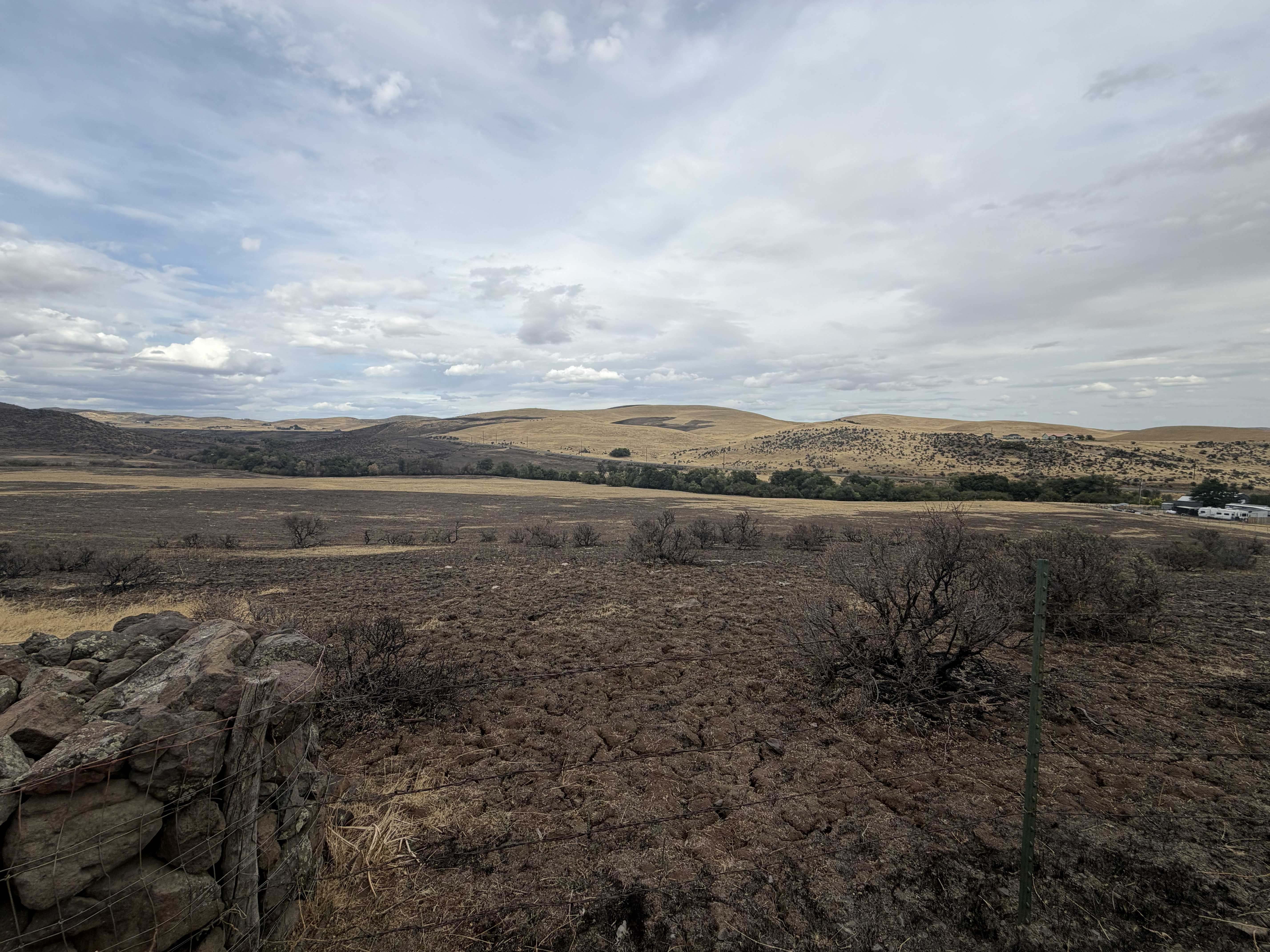
It was another tough wildfire season in Idaho this year, as about 700,000 acres burned across the state.
The impact from these fires will be felt for several years, especially for ranchers who lost significant amounts of rangeland and will struggle to find feed for their cattle.
The Big Grass Fire, which burned 579,000 acres in Oregon and Owyhee County in Idaho, and the Tartar Fire, which scorched 158,000 acres near Weiser, were two of the mega fires that garnered headlines in 2026. But there were plenty of smaller fires that impacted lots of ranchers and small communities.
“No matter what size a fire is, if it affects your rangeland, it’s a major impact for the year, even if it affects just one rancher,” said Owyhee County rancher Brenda Richards, who helped organize meetings between landowners and state and federal officials to explore programs and assistance that is available to landowners impacted by the fires.
Richards, coordinator for the Idaho Rangeland Conservation Partnership, was kept busy this year organizing meetings. “If you start adding up all the smaller fires around the state, this has been a huge fire season,” she said.
Amidst the destruction caused by wildfires this year, there have been numerous reports of ranchers joining forces with some neighbors and community members to put up heroic fights against the flames.
The Tartar Fire near Weiser is an example.
Washington County ranchers Cody Chandler and Tristan Winegar, who are both Idaho Farm Bureau Federation board members, fought the fire alongside neighbors, professional firefighters, community members and fellow Farm Bureau members from other counties.
Both said they were greatly encouraged by the support they and others received as they spent the better part of five days fighting the flames and even helping save some neighbors’ homes.
They, and others, fought on despite the danger, and fatigue, involved. Winegar remembers seeing 50-foot-tall bright red flames coming over a nearby hill, “and they were moving fast. I never was afraid, but it felt overwhelming to see that coming at you.”
Chandler and his family fought the fire pretty much for five straight days. “It was kind of a brutal experience,” he said.
When the fire started to burn toward some neighbors’ homes, he helped protect those structures, even by, at one point, putting himself in-between the flames and homes, furiously battling to keep the fire away.
He got singed hair all over his body for those efforts, but he sees that as a small price to pay for saving the homes. He played down his role in saving the homes, saying that’s what any normal person would do.
“When you drive by and you see houses about to burn and you know you have the ability to stop them from burning, that’s what you do,” he said. “Yeah, it was hot and it was hard to breathe, but it is what it is.”
After the fire was out and they had time to reflect, both Winegar and Chandler said they were heartened by the way the community came together. Not everyone was able to be on the fire line, but plenty of people did what they could, including keeping those who did fight the flames fed and cared for.
One day after returning for a rest from fighting the fire, Chandler, Winegar and the crew they were with found 40 wrapped cheeseburgers, with all the toppings, waiting for them in a cooler.
“Not one of them went to waste, I can tell you that,” Winegar said. “That didn’t happen just once. Every day when I came home, there was something on my step, from somebody. It meant just as much as somebody being out there on the line with us.”
“The outpouring of love and support from the community has been phenomenal,” he added. “It gives you hope for humanity.”
“People would show up out on the fire and give us hamburgers, snacks, and I had no idea where it was coming from until after the fire I realized there was this thing going on behind the scenes that was just amazing,” Chandler said.
“It was just amazing how people rallied together,” he added. “Family, friends, neighbors; we know that when you need them, they show up.”
Of course, the fires left a trail of destruction, some of it almost too difficult to recount. That includes the hundreds of dead cattle that were not able to be moved out of the way of fast-moving flames.
Winegar lost 90 head of cattle, while Chandler lost about a dozen. All of their neighboring ranches also lost cattle. Winegar said seeing those dead cattle was difficult for him to handle. He said the fire burned 20 miles in two hours and there was no way to save them.
“The hardest part for me when you see the burnt cattle is not the money that we lost – that is difficult; I’m not going to say that that’s not going to be a trial – but the hardest part is when you see the cattle,” he said. “Seeing that aftermath hits you pretty hard. That is something that I’ll never forget.”
The Tartar Fire, and other fires, destroyed a lot of rangeland and now ranchers will struggle for up to a few years to find places and ways to feed their cattle.
Richards’ operation lost access to all of its rangeland in the 2015 Soda Fire and had to lease rangeland out of state for all its cattle.
“It’s extensive expenses you’re not used to having,” Richards said about dealing with the loss of rangeland. “Some people might have to sell their herds down. Those are tough decisions for folks.”
Idaho Cattle Association Executive Vice President Cameron Mulrony said the loss of rangeland can have multiple impacts on a cattle operation. For example, some ranches may have to liquidate part of their herd, which affects the genetics they can best utilize on their rangeland.
“The impact of that … will last three generations, in my opinion,” he said. That’s 15 years.
“This fire’s going to affect our feed clear into the middle of next summer probably,” Chandler said. “The loss of rangeland is huge. Without the grass, we have to purchase hay or we’re trying to lease pasture other places. And with all the fires in the West … everybody is looking for feed, they’re looking for hay. It’s definitely elevated the price of everything. It’s going to be a couple of years to get back to normal when it comes to the feed.”
He said that a lot of rangeland burned so hot that it will need to be re-seeded with grass seed.
But, he added, because of the millions of acres now that have burned across the West, everybody’s competing against everybody else for that grass seed and the biggest buyer of grass seed is the federal government.
“They’re going to be going out and contracting for as much of that seed as they can, so we’ll be competing with them for that seed,” Chandler said.
After a wildfire, there is also a lot of fence to replace. Winegar said about 400 miles of fence needs to be fixed after the Tartar Fire. “That’s a lot of fence and it’s a daunting task and it’s overwhelming. But it can be done – it can be overcome – and we just have to take it one day at a time.”
“It’s going to be a long time to get those fences back up, and a lot of expense,” Chandler said.
All those things aside, he added, “we can get the fences fixed, the grass will grow back and we’re just grateful that everybody was safe. We got through it without any harm and that’s (a) miracle.”
Winegar said the damage from the Tartar Fire is only one example of what happened in Idaho this year.
“We’re also not the only ones that burned. I don’t want to take away anything from any of the other fires,” he said. “The Big Grass Fire … is (many) times bigger than this fire and I can’t even imagine the damage that it’s caused.”
One thing that is clear in the aftermath of the Tartar Fire, both Chandler and Winegar said, is that proper grazing management is a great tool to help limit the size of wildfires.
Chandler pointed to several areas in the midst of otherwise scorched hillsides that were still yellow because they were recently grazed and the fire passed around them.
“As you can see back here, we grazed all that country this spring,” he said. “We didn’t have to do anything there. The fire just put itself out and that’s the power of grazing a lot of this ground. The fire just doesn’t have the fuel to carry. Everywhere you can see that is yellow still is that way because it was grazed.”
Winegar said he can only imagine what the fire would have been like if cattle in the area hadn’t grazed where they grazed.
“To me, that’s an overwhelming thought: Could the fire have been hotter and bigger and faster?” he said. “Cattle are by far the No. 1 grazing management tool and they need to be utilized to do that.”
Mulrony said it’s been proven definitively that grazing helps minimize fire size.
“Fuels will be consumed,” he said. “They will either be consumed by time, cattle or fire. The more we let fuels build, the more fire is going to win in that trifecta.”
Still can't find what you are looking for? Find by topic:
- County Presidents & Board Information
- County Resource Page
- Delegate Form
- Discount Programs
- Discussion Meet
- Discussion Meet - High School
- Education Programs
- Events
- Excellence Award (YF&R)
- Expense Voucher
- Flickr- Photos
- Gem State Producer
- High School Discussion Meet
- High School Speech Contest
- Hope in Idaho Ag
- House of Delegates Credentials Form
- IFBF Board of Directors
- IFBF Staff
- Insurance
- Issue Advisory
- Legislative Action Program
- Legislative Issues
- Library
- MAC Trailer
- Magazines
- Map My Benefits
- Member Benefits
- Member Discount
- Membership Application
- Mental Health Resources
- Mission Statement
- Moving Agriculture to the Classroom
- Newsletter Sign up
- News Releases
- News Room
- Open Range Law
- Photo Contest
Thank You to Our Partners


